High-speed, energy-efficient servo robotics optimized for New Zealand's plastics processing, agricultural technology, and packaging sectors.
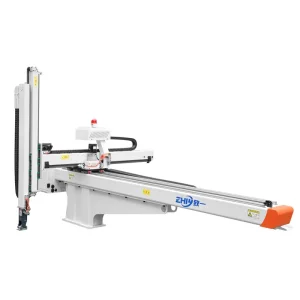
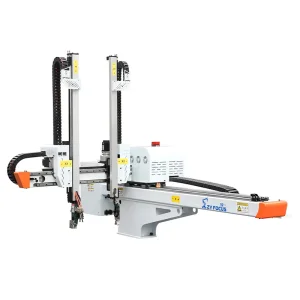
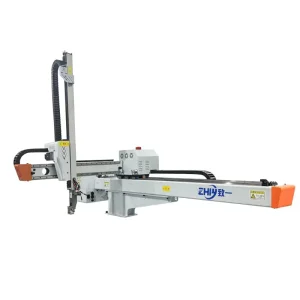
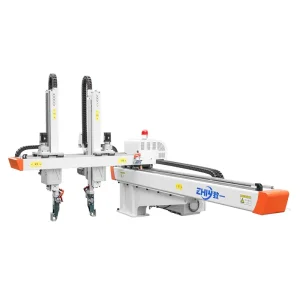
Strategic insights into New Zealand's evolving manufacturing sector, regional industrial hubs, structural labor constraints, and technical requirements.
New Zealand's manufacturing landscape is undergoing a critical technology transformation. Across major industrial hubs—including Auckland (Penrose, Wiri, East Tamaki), Christchurch (Hornby, Riccarton), Hamilton (Waikato region), and Tauranga (Bay of Plenty)—manufacturers face a unique convergence of operational challenges and growth opportunities. As an island nation with high labor costs, stringent occupational health and safety regulations (WorkSafe NZ), and long international supply lines, New Zealand industrial operations demand robust, highly efficient, and low-maintenance automation equipment.
The domestic plastics transformation industry in New Zealand serves critical sectors: dairy packaging, hort-tech containers, rigid consumer packaging, medical device molding, and construction component manufacturing. However, New Zealand processors are constrained by severe skilled labor shortages, with operator hourly wages rising steadily alongside high turnover rates. To maintain global competitiveness against imported finished goods, Kiwi manufacturers are actively replacing manual labor and legacy pneumatic take-out pickers with modern 3-axis and 5-axis AC servo robotic arms.
Automation eliminates dependence on scarce local machine operators, maintaining full 24/7 continuous operation across 3 shifts without operational downtime.
With electricity costs being a top overhead in NZ, regenerative kinetic servo drives reduce peak kilowatt-hour draw by up to 35% compared to hydraulic systems.
Equipment engineered specifically to comply with AS/NZS 4024 (Safety of Machinery) and Electrical Safety Standards (RCM/EMC), ensuring immediate site sign-off.
Transitioning New Zealand manufacturing facilities into fully autonomous, digitized Industry 4.0 smart factories.
Transitioning from basic single-axis pneumatic pickers to 3-axis and 5-axis full-servo dual-arm robots. Absolute position encoder feedback eliminates homing sequences and protects expensive mold cavities during unexpected power disruptions.
Integrating servo robots with specialized EOAT (End-of-Arm Tooling) for automated label insertion, vision inspection, automated degating, robotic stacking, and box loading, achieving total cycle times under 4.5 seconds for thin-wall dairy containers.
Integrating Euromap 67 / Euromap 73 communication protocols with edge gateways, allowing real-time monitoring of vibration, thermal stress, and cycle efficiency from anywhere in New Zealand or via remote Chinese technical support teams.
Optimized gripping and adaptative force control for processing post-consumer recycled (PCR) resin products, maintaining high dimensional stability despite material variance in agricultural plastic manufacturing.
Turnkey automation architectures designed to resolve specific application challenges in New Zealand manufacturing environments.
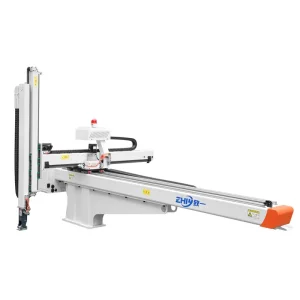
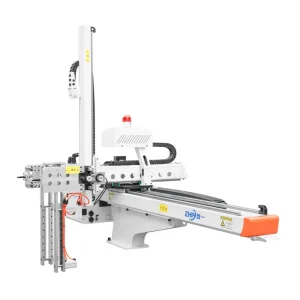
A. Dairy & Food Packaging Sector Automation: High-volume container production requires hyper-speed take-out robots capable of handling multi-cavity molds with extreme reliability. Our five-axis dual-section servo robots feature rigid aluminum/carbon-fiber hybrid arms engineered for low vibration at high acceleration (>10G), preventing drop-out defects in fast-cycle food container molds.
B. Heavy Agricultural & Large Technical Molding: For large-tonnage injection molding machines (ranging from 1000T up to 2300T) producing wheelbarrows, irrigation fittings, and waste bins, our Bull Head series dynamic robots provide high payload capacities (up to 50kg) with heavy-duty linear guide rails designed to withstand harsh industrial environments.
C. Cleanroom Medical Plastics: For bio-med manufacturers in Auckland and Christchurch operating ISO Class 7 cleanrooms, our non-contaminating, dust-free silicone and AC servo robots feature enclosed cable tracks, food-grade lubrication, and nickel-plated structural components.
Zhejiang Zhiyi Intelligent Robot Co., Ltd. - Empowering Global Smart Factories
Why sourcing directly from Zhejiang Zhiyi Intelligent Robot Co., Ltd. provides New Zealand enterprises an unrivaled balance of quality, precision, and procurement economy.
Founded in 2017 and recognized as a National High-Tech Enterprise, Zhejiang Zhiyi Intelligent Robot Co., Ltd. operates a state-of-the-art manufacturing facility dedicated to industrial robotics and intelligent factory transformation. By integrating lean digital assembly lines with rigorous ISO9001 quality management, we deliver precision industrial manipulators that match European performance metrics at a significantly lower capital expenditure.
Our vertical integration enables total quality control over every structural sub-assembly—from high-tensile extruded aluminum beams and precision planetary gearboxes to custom-programmed servo control systems. For New Zealand importers, this direct factory access translates into optimized lead times (typically 2-4 weeks), custom EOAT engineering, complete spare parts availability, and zero intermediary markups.
Established against the backdrop of Industry 4.0, focusing on technological innovation to elevate global manufacturing quality and production throughput.
Backed by 13 practical utility patents and inventions covering mechanical kinematics, advanced control algorithms, multi-axis synchronization, and safety sensor integration.
Fully certified under ISO9001 and European CE safety standards, undergoing 72-hour continuous dynamic burn-in testing prior to containerized export shipping.
Evaluating financial payback periods, direct ROI, freight logistics, and long-term asset value for Kiwi plant managers.
When procuring industrial automation for New Zealand plants, plant managers must evaluate both upfront capital expenditure (CAPEX) and long-term operational expenditure (OPEX). Importing directly from our facility provides distinct strategic advantages:
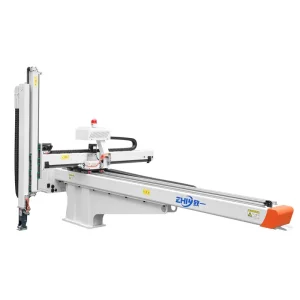
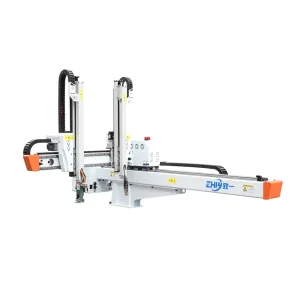
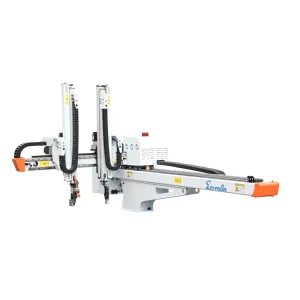
Explore our complete catalog of high-precision servo robotics, bullhead manipulators, and customized automation systems.
Detailed answers to key operational questions regarding equipment deployment, compliance, power compatibility, and support in New Zealand.
Yes. All robotics export packages engineered for the New Zealand market are factory-configured for 400V 3-phase 50Hz electrical supplies (or 230V 1-phase for smaller auxiliary units). Electric control cabinets incorporate CE and AS/NZS compliant circuit protection, line filters, and RCM marked power supplies.
Our automation cells are supplied with dual-channel safety relay circuits, integrated mechanical interlocks, emergency stop integration, and support interfacing with perimeter safety fencing and light curtains according to AS/NZS 4024 safety standards.
Our robots seamlessly interface with all major global IMM brands via standard Euromap 67 or Euromap 12 signals, including ENGEL, Sumitomo, Haitian, KraussMaffei, Nissei, Yizumi, Victor Taichung, and Toshiba systems.
Standard production and factory calibration take approximately 14 to 20 business days. Direct ocean freight from Ningbo/Shanghai port to Port of Auckland or Tauranga takes approximately 14 to 18 days in transit.
We provide comprehensive English video manuals, step-by-step installation guides, and direct 24/7 video support with our senior automation engineers. Remote telemetry units can also be integrated into the control cabinet for real-time online troubleshooting.
Absolutely. Our in-house engineering team designs and manufactures customized mechanical, vacuum, or pneumatic EOAT grippers based on 3D CAD files (.STEP/.IGS) provided by our clients for specific product pick-and-place requirements.
Consult with our senior robotics engineers to receive tailored product recommendations, ROI calculations, and direct factory quotes for your facility.
Send Inquiry Now ZHIYI Robotics