High-speed, multi-axis servo robotics engineered for high-tonnage injection molding machines and high-precision factory automation.
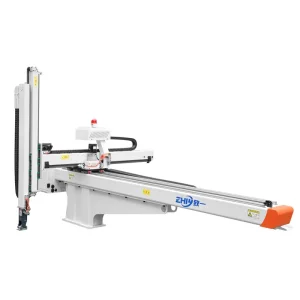
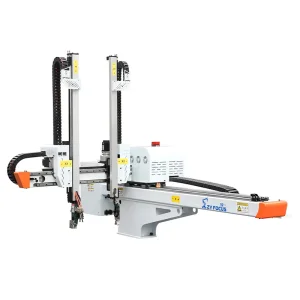
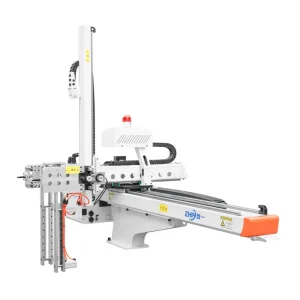
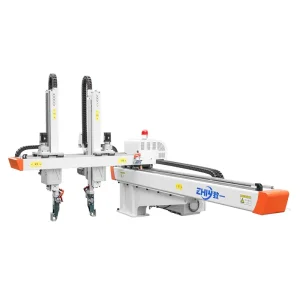
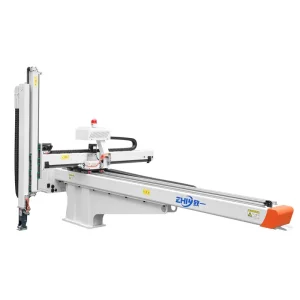
Analyzing structural shifts in manufacturing, energy consumption, and high-speed robotic integration under Industry 4.0 standards.
Global manufacturing is encountering unprecedented headwinds: escalating labor overheads, stringent safety mandates, and urgent calls for carbon footprint reduction. Industrial motor robots—specifically full-AC servo-driven manipulators—have shifted from discretionary capital upgrades to mandatory core infrastructure across Asia, Europe, and the Americas.
Standard off-the-shelf Cartesian robots frequently fail to meet specialized cycle time requirements or spatial footprints of advanced Injection Molding Machines (IMMs). Original Design Manufacturing (ODM) partners provide specialized mechanical structures, custom End-of-Arm Tooling (EOAT), and bespoke software integration essential for complex automotive, medical, and packaging lines.
Modern servo motor robotics leverage dynamic energy regeneration and ultra-lightweight structural alloys. Compared to legacy pneumatic pickers, multi-axis AC servo systems reduce operational power consumption by up to 45% while delivering sub-second takeoff speeds and micro-meter positioning repeatability.
Integrating a direct-drive AC servo robot with an injection molding machine reduces overall mold-open phase duration by an average of 1.2 to 2.8 seconds per cycle. Over an annual run of 5 million cycles, this time saving directly expands plant throughput by 12% to 18% without expanding the floor footprint.
Understanding kinematic setups, payload dynamic distribution, and structural variants (3-Axis vs 5-Axis vs Bullhead Heavy-Duty Systems).
| Architecture Type | Axis Configuration | Applicable IMM Tonnage | Payload Capacity | Repeatability | Primary Industrial Use Case |
|---|---|---|---|---|---|
| 3-Axis Servo Manipulator | X, Y, Z AC Servo Drives | 100T – 1000T | 3 kg – 15 kg | ±0.02 mm | Standard part removal, stacking, basic runner separation |
| 5-Axis Double Arm Servo Robot | X, Y, Z + A, C Servo Wrist Turn | 250T – 1500T | 5 kg – 25 kg | ±0.015 mm | In-Mold Labeling (IML), complex orientation, medical inserts |
| Bullhead High-Load Servo Arm | Heavy-duty 3-Axis / 5-Axis | 1500T – 3600T | 30 kg – 60 kg+ | ±0.05 mm | Automotive bumpers, trash cans, large appliance housings |
| Silicone-Specialized Servo Arm | High-speed 3-Axis Servo | 250T – 400T (LSR) | 2 kg – 8 kg | ±0.01 mm | Liquid Silicone Rubber (LSR) parts, cleanroom medical devices |
At the core of Zhiyi's ODM motor robots are high-torque AC permanent magnet synchronous motors coupled with absolute optical encoders. Unlike incremental encoder systems, absolute encoders maintain position data without requiring zero-point homing after unexpected power interruptions.
Communication protocols utilize fieldbus architectures (EtherCAT / CANopen), enabling sub-millisecond response latency between the primary robot controller, the injection machine's Euromap 67 / Euromap 12 interface, and peripheral vision systems.
High-acceleration take-off creates substantial inertia and mechanical vibration. Our engineering teams employ structural finite element analysis (FEA) to optimize cross-sectional beam profiles using structural aviation aluminum extrusion profiles and high-grade ductile iron castings.
Integrated anti-vibration motion control algorithms actively filter resonance frequencies, ensuring smooth stop sequences and prolonging the mechanical lifespan of linear bearings, rack-and-pinion assemblies, and planetary gearboxes.
In today's rapidly developing industrial automation field, Zhejiang Zhiyi Intelligent Robot Co., Ltd. has become a recognized leader through deep engineering experience, persistent innovation, and strict commitment to international quality standards.
Established in 2017, the company has always been committed to providing global industrial clients with premium automation equipment, custom servo manipulators, articulated robots, and complete turnkey factory automation solutions.
Founded on a vision to transform traditional plastic processing lines into smart factory systems under the Industry 4.0 paradigm.
Pioneered high-efficiency truss manipulators for thermos cups, lunch boxes, and food packaging containers, capturing significant domestic market share.
Expanded R&D into multi-joint articulated robots, automatic packaging lines, auto parts manufacturing, and precision electronic packaging solutions.
Awarded the prestigious title of "National High-Tech Enterprise" and ISO9001 / CE certifications for export excellence.
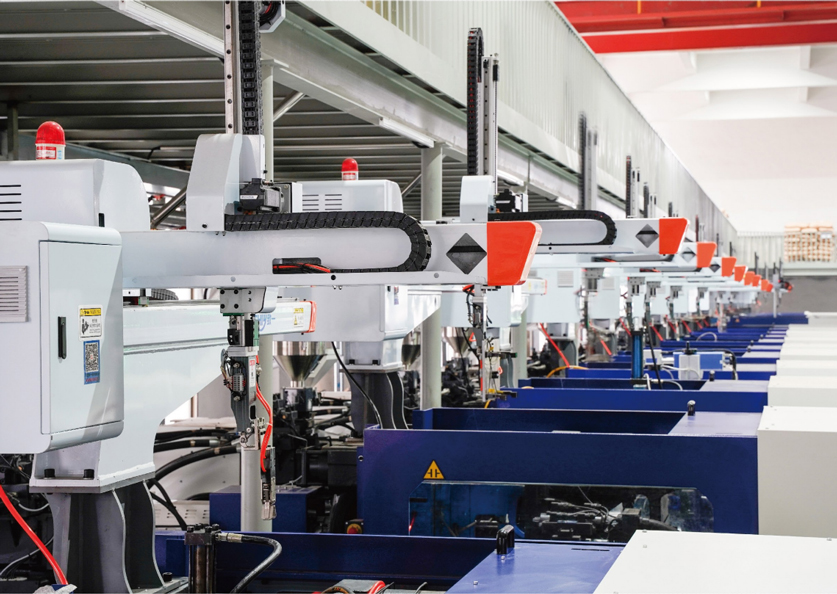
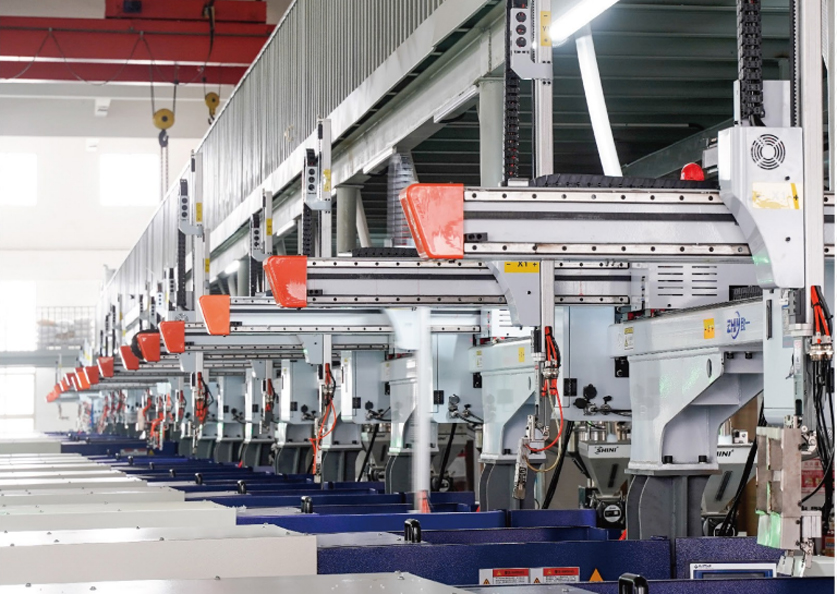
Demonstrated delivery capability across tier-1 manufacturing facilities globally.











Custom engineering deployments adapted to stringent sector-specific standards worldwide.
High-tonnage injection molding machines (2000T - 3500T) producing instrument panels, bumpers, and door trim require specialized Bullhead 3-Axis and 5-Axis Servo Robotic Arms. These systems handle payload weights over 50kg while ensuring smooth extraction without distorting warm plastic geometries.
For medical syringes, petri dishes, and Liquid Silicone Rubber (LSR) components, our 3-Axis Silicone Servo Robotic Arms operate with oil-free pneumatic components, particulate-free linear guides, and ISO Class 7 cleanroom compliance, avoiding contamination during high-speed take-out cycles.
Fast-Moving Consumer Goods (FMCG) like food containers, thermos cups, and lunch boxes demand ultra-fast cycle times (under 3.5 seconds total). 5-Axis double-arm robots synchronize label placement with part removal, reducing manual labor costs by up to 80% per production cell.
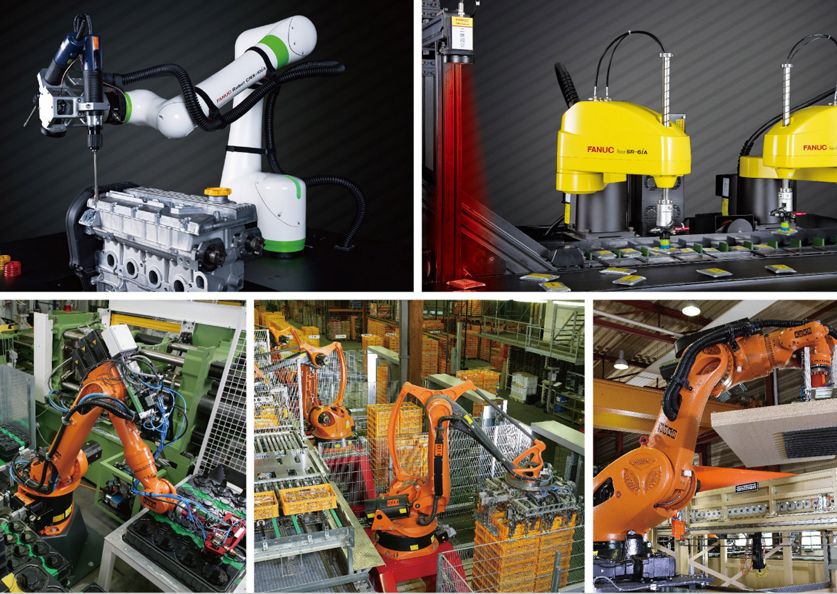
Zhejiang Zhiyi does not merely sell robotic hardware; we provide complete, integrated ecosystem solutions. Our engineering teams assess factory layouts, mold CAD files, and cycle targets to deliver complete automation cells.
How edge AI, smart sensing, and direct-drive motion algorithms are reshaping the next generation of industrial robotics.
Future servo controllers will embed dynamic vibration and thermal analytics directly at the driver level. Real-time telemetry detects ball-screw wear or motor strain prior to component failure, preventing unplanned downtime.
Moving beyond static pneumatic vacuums, future EOAT tooling incorporates soft-robotic tactile sensors. This allows the arm to pick delicate, variable-geometry parts without surface marking or force distortion.
Next-generation servo drive buses feed kinetic braking energy back into the power grid or common DC bus, reducing net electrical draw by up to 25% during continuous start-stop operation cycles.
Seamless communication protocols stream output counts, mold cycle durations, and energy profiles straight into enterprise cloud platforms for real-time global OEE monitoring.
Expert insights on motor robot selection, installation requirements, and global technical support.
A 3-axis servo robot controls motion along the primary Cartesian coordinates (X-traverse, Y-vertical, Z-kick out). It is ideal for straight part removal and stacking. A 5-axis servo robot adds full AC servo wrist rotations (A-axis and C-axis), allowing parts to be flipped, angled, or precisely orientated for secondary processes like insert placement, In-Mold Labeling (IML), or tight spatial extraction.
Selection depends on three core criteria: IMM clamping force (tonnage), mold dimensions (platen size and daylight clearance), and total target payload (part weight + EOAT tool weight). For example, 250T–350T machines typically pair with compact single-arm 3-axis systems, whereas 2000T–2300T large-scale automotive molders require heavy-duty structural arm architectures or Bullhead designs.
We offer end-to-end ODM customization including bespoke beam lengths, dual-arm split movement, specialized cleanroom surface coatings, customized EOAT mechanical hands, tailored software PLC logic, multi-language controller UIs, and full compliance with international safety protocols (CE, ISO9001, Euromap standard interfaces).
Most industrial clients realize a full Return on Investment (ROI) within 8 to 14 months. Savings stem from labor reduction (one operator managing multiple IMM cells), elimination of part damage caused by manual drops, reduced scrap rates via consistent take-out timing, and an overall 10%–20% increase in daily production output.
Engineered for endurance, operational safety, and continuous 24/7 manufacturing cycles.
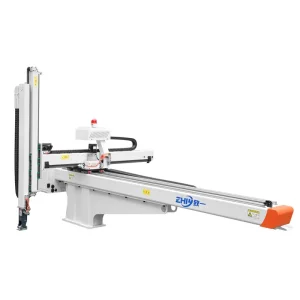
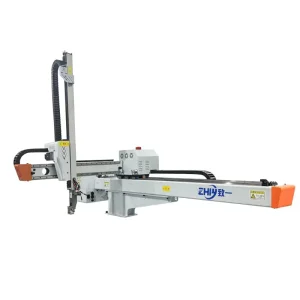
 ZHIYI Robotics