10 Best Robot Parts Suppliers for Global Buyers?

Time:2026-09-16 Author:Charlotte
0%

Choosing reliable Robot Parts suppliers is rarely as simple as comparing prices on a webpage. Global buyers must examine motor torque, connector standards, material quality, firmware support, and replacement availability. A low-cost gripper may look attractive, yet inconsistent tolerances can create costly downtime on an assembly line.

Ken Goldberg, a robotics professor at the University of California, Berkeley, is often associated with this practical view: “Automation is not about replacing people; it is about augmenting people.” His point matters when evaluating suppliers. The best partner should provide dependable components while supporting engineers, technicians, and operators throughout a robot’s service life.

This guide reviews ten Robot Parts suppliers for international buyers. It considers product range, manufacturing experience, quality procedures, technical documentation, shipping capability, and after-sales assistance. Certifications matter, but they do not tell the whole story. A supplier may hold recognized certifications and still respond slowly when a servo drive fails during production.

Real details reveal more.

Look for clear datasheets, batch traceability, test reports, sample policies, and honest lead-time updates. Ask whether replacement cables, encoders, reducers, and controllers remain available after several years. Communication also deserves attention, especially across time zones and languages.

No ranking is perfect. Supplier performance can vary by region, product category, and order size. Still, careful comparison reduces avoidable risk. The following selection offers a practical starting point for buyers who value compatibility, reliability, and long-term technical support.
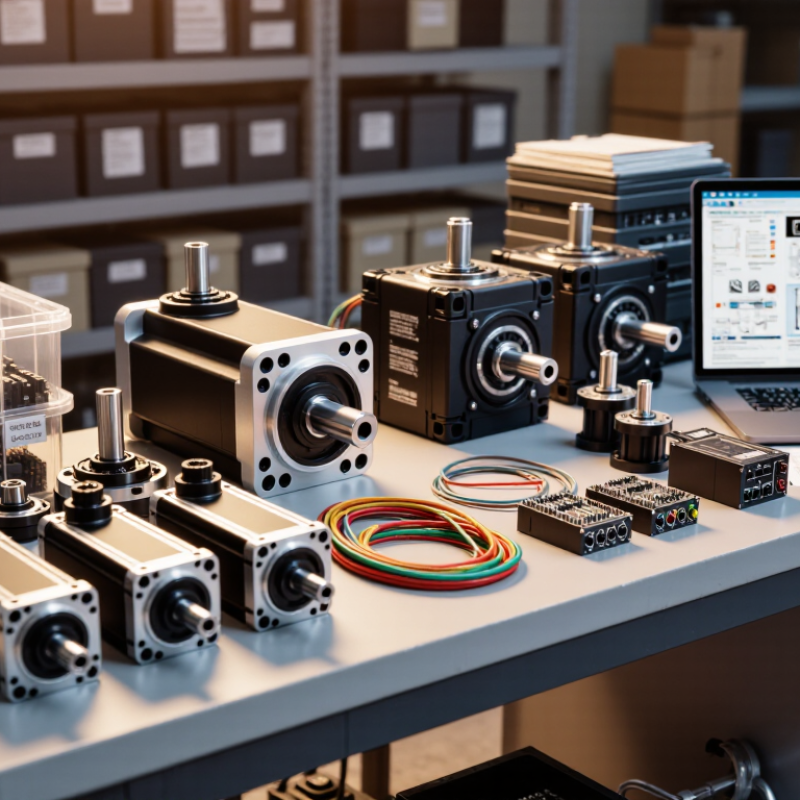
10 Best Robot Parts Suppliers for Global Buyers?

What Defines a Reliable Robot Parts Supplier for Global Buyers

10 Best Robot Parts Suppliers for Global Buyers

What Defines a Reliable Robot Parts Supplier for Global Buyers

A reliable robot parts supplier offers more than a catalog and a low quoted price. They understand torque limits, connector standards, mounting tolerances, and operating temperatures. Their engineers can explain compatibility in practical terms. Clear drawings, material data, and test reports should be available before payment.

Traceability matters during international purchasing. Each gearbox, sensor, cable, or controller should have a batch number and inspection record. Reliable suppliers also provide accurate lead times, export documents, protective packaging, and responsive technical support. Ask for a sample before ordering large quantities. A small fitting error can stop an entire assembly line.

Communication reveals operational maturity. Good suppliers confirm specifications instead of guessing. They report production delays early, even when the news is uncomfortable. After-sales support should include replacement guidance and fault analysis. However, no supplier is flawless. A shipment may arrive with damaged packaging, or a document may need correction. What matters is the response: ownership, evidence, and a practical solution.

Global buyers should compare supplier performance over several orders. Review delivery consistency, product conformity, communication speed, and complaint handling. Independent audits and customer references can strengthen confidence, but they are not absolute proof. Test the relationship with a controlled order first. That step may feel slower, yet it often prevents costly downtime. Reliability is demonstrated through repeated actions, not polished promises.

What Defines a Reliable Robot Parts Supplier for Global Buyers?

A practical 100-point supplier evaluation model based on common international procurement requirements

Global buyers should prioritize verified quality systems, consistent technical compatibility, dependable delivery, export documentation, traceability, and responsive after-sales support. The percentages represent recommended evaluation weights, not rankings of individual companies or brands.

Key Criteria for Evaluating Robot Parts Quality and Compatibility

When evaluating robot parts suppliers for global buyers, quality starts with traceable evidence, not attractive product photos. Ask for material records, dimensional reports, and inspection data from recent batches. Check critical tolerances with calibrated tools when the parts arrive. Small errors can create vibration, heat, or unexpected wear. Fit matters.

Compatibility requires more than matching a part number. Compare mounting patterns, shaft dimensions, connector pinouts, voltage ranges, communication protocols, and firmware requirements. Review the supplier’s technical drawings before ordering. Request samples when possible, then test them under realistic loads, temperatures, and duty cycles. A component may work on a bench but fail during continuous operation.

Reliable suppliers explain quality controls clearly and respond with precise documentation. Look for batch traceability, consistent packaging, clear warranty terms, and practical support across time zones. Confirm whether replacement parts will retain the same dimensions and specifications. I once treated a connector as interchangeable because it looked identical; the pin arrangement was different. That mistake delayed testing. My checklist now includes photographs, written confirmation, and a small pilot order. Even strong suppliers can make production errors, so independent verification remains necessary. Pay attention to incomplete answers. They often reveal more than polished promises.

10 Best Robot Parts Suppliers for Global Buyers? - Key Criteria for Evaluating Robot Parts Quality and Compatibility

Comparative supplier-screening benchmark based on commonly published industrial sourcing requirements. Verify current specifications, certificates, pricing, and lead times directly before purchasing.

Rank Supplier Profile Primary Supply Region Core Robot Parts Typical Materials / Processes Typical MOQ Typical Lead Time Machining Tolerance Quality Documentation Compatibility Support Overall Score
1 Supplier Profile 01 East Asia Precision brackets, gear housings, joint covers, mounting plates Aluminum alloys, stainless steel, CNC milling, anodizing 10–50 pcs 2–5 weeks ±0.02–0.05 mm Inspection report, material certificate, dimensional report, RoHS/REACH declaration Drawing review, CAD feedback, tolerance analysis, sample approval 9.2/10
2 Supplier Profile 02 Western Europe Servo mounting components, linear-axis parts, precision shafts Tool steel, stainless steel, grinding, turning, heat treatment 5–25 pcs 3–7 weeks ±0.01–0.03 mm ISO 9001 system, calibration records, heat-treatment certificate, full traceability Interface verification, shaft-fit review, tolerance-stack support 9.1/10
3 Supplier Profile 03 North America Robot end-effectors, gripper fingers, custom adapters Aluminum, engineering plastics, additive manufacturing, CNC machining 1–20 pcs 1–4 weeks ±0.05–0.10 mm Material data sheet, inspection report, design revision record Application engineering, payload review, mounting-pattern confirmation 8.9/10
4 Supplier Profile 04 Southeast Asia Cable carriers, protective covers, sensor brackets, sheet-metal guards Carbon steel, stainless steel, polycarbonate, laser cutting, bending 20–100 pcs 3–6 weeks ±0.05–0.15 mm Coating report, material certificate, dimensional inspection, packaging checklist 3D file review, cable-clearance check, enclosure-fit validation 8.7/10
5 Supplier Profile 05 Central Europe Precision gears, couplings, pinions, transmission components Alloy steel, carburizing, grinding, broaching 25–200 pcs 5–10 weeks ±0.01–0.04 mm Gear inspection chart, hardness report, material traceability, ISO 9001 documentation Torque and backlash review, module/pressure-angle verification 8.6/10
6 Supplier Profile 06 South Asia Robot frames, structural links, brackets, welded assemblies Aluminum profiles, mild steel, stainless steel, welding, powder coating 10–75 pcs 4–8 weeks ±0.10–0.30 mm Welding inspection, coating thickness report, material declaration Load-path review, assembly drawing confirmation, mounting-hole verification 8.4/10
7 Supplier Profile 07 East Asia Plastic covers, cable glands, protective housings, seals ABS, PA, POM, silicone, injection molding, compression molding 100–1,000 pcs 5–12 weeks ±0.10–0.25 mm Material safety data, flammability report, dimensional report, RoHS/REACH declaration Ingress-protection review, connector clearance, mold-design feedback 8.3/10
8 Supplier Profile 08 North America Electrical panels, wiring harnesses, connector assemblies Copper, PVC, thermoplastics, crimping, cable assembly 25–250 pcs 3–8 weeks Not applicable; electrical test controlled Continuity test, insulation test, wiring diagram, component traceability Pinout review, voltage/current verification, connector compatibility check 8.2/10
9 Supplier Profile 09 Eastern Europe Bearings, bushings, rollers, linear-motion hardware Bearing steel, bronze, polymer composites, grinding, honing 20–300 pcs 4–9 weeks ±0.01–0.05 mm Hardness report, dimensional report, lubricant specification, batch traceability Fit and clearance review, load-rating comparison, lubrication guidance 8.1/10
10 Supplier Profile 10 Middle East and North Africa Fabricated bases, safety fencing, work-cell accessories Steel, aluminum, mesh panels, cutting, bending, powder coating 10–100 pcs 4–10 weeks ±0.15–0.40 mm Material certificate, coating report, assembly inspection, safety documentation Footprint review, access-clearance check, safety-layout coordination 7.9/10
Recommended evaluation criteria: dimensional accuracy, material traceability, production consistency, certification coverage, compatibility with existing interfaces, engineering support, minimum order quantity, lead time, packaging quality, and after-sales response.

Profiles of Ten Leading Robot Parts Suppliers Worldwide

Profiles of Ten Leading Robot Parts Suppliers Worldwide

Global robot parts sourcing requires more than a wide catalog. It demands traceable materials, stable tolerances, and responsive engineering support. The following ten supplier profiles represent different strengths across major manufacturing regions.

Supplier One focuses on precision gearboxes for articulated joints. Its inspection reports are detailed, though delivery windows can fluctuate.

Supplier Two produces servo motors with strong thermal performance and clear test data. Its smaller product range may limit complex projects.

Supplier Three supplies harmonic reducers for compact robots. Buyers should verify backlash figures under real operating loads.

Supplier Four specializes in industrial bearings and seals. It offers consistent dimensions and useful replacement guidance.

Supplier Five develops machine-vision mounts and protective housings. Its designs are practical, but customization may require patience.

Supplier Six makes cable carriers and flexible wiring assemblies. It performs well in repetitive motion applications.

Supplier Seven provides aluminum frames and machined brackets. Surface finishing is reliable, although sample reviews remain important.

Supplier Eight offers pneumatic grippers and fittings for factory automation. Its documentation is accessible and installation errors are less likely.

Supplier Nine supplies joint encoders and safety-related position components. Buyers should request compatibility tests before large orders.

Supplier Ten supports integrated assemblies, including brackets, connectors, and fasteners. This convenience can reduce procurement time, but component traceability must be checked carefully.

In practice, no supplier is perfect. Experienced buyers compare certificates, sample measurements, warranty terms, and response times before approval. A supplier’s polished website proves little. Real confidence comes from repeatable tests, honest limitations, and clear communication when a part fails.

Comparing Prices, Certifications, Lead Times, and Support Services

For global buyers, the best robot parts supplier is not always the cheapest. Compare unit prices, tooling fees, shipping terms, and replacement costs together. A low quote may exclude testing or protective packaging. Ask for certification copies, test reports, and traceability records before placing a large order. Certifications such as ISO 9001 can show process control, but they do not guarantee every shipment will be flawless. Request a sample and inspect dimensions, connectors, surface finish, and operating performance.

Tips: Build a simple comparison sheet. Record price, certification scope, minimum order quantity, production lead time, and warranty terms. Ask whether the quoted lead time includes inspection and export preparation. Get answers in writing. A two-week estimate can become five weeks during capacity changes or holiday closures. Confirm the supplier’s response time, engineering support, spare-parts policy, and escalation process. A helpful support team can reduce downtime when a motor, sensor, or controller fails unexpectedly.

Experienced buyers should also review communication quality. Clear drawings, revision control, and realistic delivery updates matter as much as sales promises. Ask for references from similar automation projects, when possible. Check whether the supplier can support different voltage, connector, and documentation requirements. Do not rely on a polished website alone. It is easy to overvalue certificates and undervalue practical support. My own assessment would remain provisional until samples, records, and several deliveries match the supplier’s claims. No scorecard is perfect.

Steps for Choosing and Purchasing Robot Parts Internationally

Buying robot parts internationally starts with a clear technical brief. Record the part number, dimensions, voltage, torque, connector type, firmware needs, and operating temperature. A photograph beside a ruler can prevent costly misunderstandings. Ask suppliers for datasheets, drawings, material details, and traceable test records. Do not rely on marketplace photos. They are often incomplete.

Evaluate suppliers through production experience, inspection procedures, export history, and after-sales response time. Request references from comparable automation projects. Ask for samples before placing a large order. Test noise, heat, backlash, and repeatability under realistic loads. Independent inspection is valuable for expensive drives or safety-related components. Certification documents must match the exact model. Verify destination-country import and safety requirements.

Confirm currency, lead time, packaging, warranty, replacement terms, and delivery responsibility in writing. Compare landed costs, including freight, duties, insurance, and testing fees. Use protected payment methods and staged payments for custom parts. Keep serial numbers and inspection photos in one file. One missing connector can delay an entire project. I once accepted a delivery promise without a production milestone. That was a mistake. Build a realistic buffer and question every unclear specification.

FAQS

What evidence should buyers request when evaluating robot parts quality?

Request material records, dimensional reports, and recent batch inspection data. Photos are not enough. Use calibrated tools to check critical tolerances after delivery.

How can buyers confirm component compatibility?

Compare mounting holes, shaft dimensions, connector pinouts, voltage ranges, and communication protocols. Review technical drawings before ordering. A matching part number may still hide important differences.

Why are samples important before placing a large order?

Samples reveal problems that bench testing may miss. Test them under realistic loads, temperatures, and duty cycles. Continuous operation tells a harsher story.

Which quality controls indicate a reliable supplier?

Look for batch traceability, consistent packaging, inspection records, and clear warranty terms. Ask how replacement parts retain the same specifications. Incomplete answers deserve careful attention.

How should buyers compare robot parts prices?

Compare unit prices, tooling fees, shipping, testing, packaging, and replacement costs. A low quote may exclude essential services. Cheap can become expensive.

Do certifications guarantee flawless robot parts?

No. Certifications can indicate process control, but they cannot guarantee every shipment. Inspect samples and verify actual measurements. Trust evidence more than certificates alone.

What delivery details should buyers confirm?

Ask whether lead times include production, inspection, and export preparation. A two-week estimate can become five weeks during capacity changes. Get updates in writing.

What support services reduce downtime after a component fails?

Confirm engineering response times, spare-parts policies, warranty coverage, and escalation procedures. Support across time zones can matter during an urgent failure. My scorecard would remain provisional until several deliveries match the claims.

Conclusion

Choosing the right Robot Parts supplier is essential for global buyers seeking reliable performance, consistent quality, and efficient international delivery. A trustworthy supplier should offer accurate product specifications, strict quality control, compatibility with common robotic systems, transparent documentation, and responsive technical support. Buyers should also evaluate certifications, material standards, testing procedures, warranty terms, production capacity, pricing, lead times, and after-sales service before making a decision.

This guide presents profiles of ten leading types of Robot Parts suppliers worldwide without focusing on specific brand names. It compares their strengths in product quality, customization, certifications, delivery efficiency, and customer assistance. It also explains practical steps for purchasing internationally, including confirming technical requirements, requesting samples or test reports, checking shipping and import arrangements, reviewing payment terms, and establishing clear communication. By following these guidelines, businesses can reduce procurement risks and select suitable Robot Parts for automation projects, maintenance needs, and long-term operational goals.

Charlotte

Charlotte

Charlotte is a seasoned marketing professional with a deep understanding of the company's portfolio and a passion for elevating its presence in the market. With a keen eye for detail and a commitment to excellence, she ensures that our professional blog is regularly updated with insightful articles......