Choosing the right Manipulator Robot can shape productivity, product quality, and workplace safety. Global buyers face many options, including articulated, Cartesian, SCARA, collaborative, and hydraulic systems. Each type suits different loads, movements, speeds, and working environments.
An articulated robot may handle complex paths around a vehicle assembly line. A Cartesian model can deliver precise movement across a rectangular workspace. SCARA systems often support fast pick-and-place tasks, while collaborative robots may assist workers near inspection benches. These examples show why application details matter more than attractive catalog images. Payload, reach, repeatability, duty cycle, end-of-arm tooling, and control compatibility deserve careful review. Installation space matters too.
There is no universal best choice. A lower purchase price may hide integration costs, training needs, or difficult maintenance. Some supplier claims also require practical verification. That is where experience becomes valuable. Buyers should request application tests, maintenance records, safety documentation, and realistic delivery terms. Local electrical standards, machine-safety requirements, and service availability must also be checked before purchase. A technically impressive robot may still perform poorly without suitable tooling or skilled support. It happens.
This guide compares leading Manipulator Robot types for international buyers. It focuses on practical strengths, limitations, operating conditions, and selection risks. The discussion also considers total ownership cost, supplier reliability, and future expansion. Careful evaluation can reduce costly surprises. Perfect decisions are rare. Better-informed decisions are achievable.
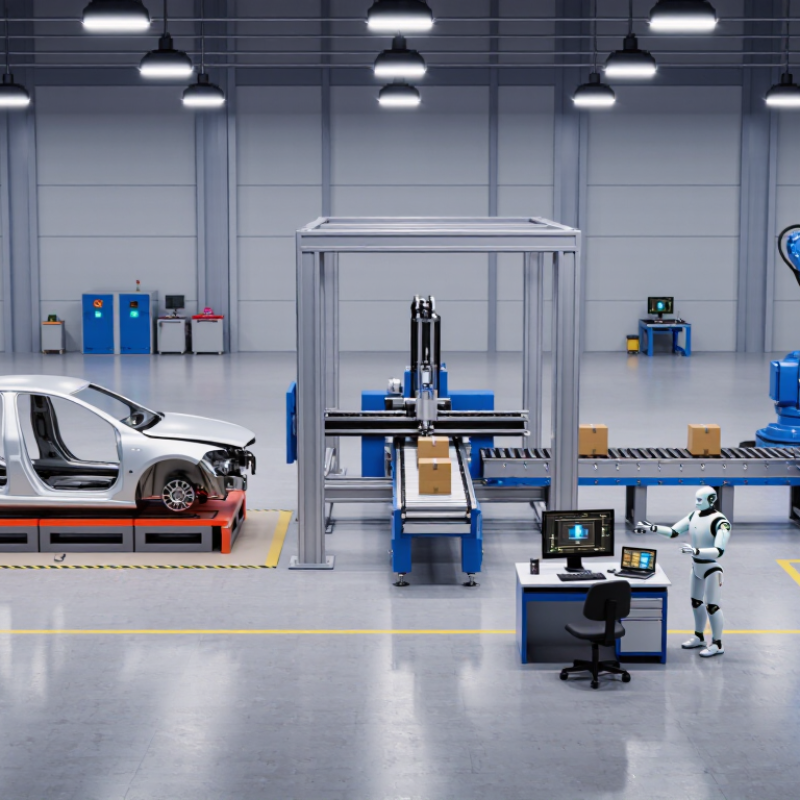
Top Manipulator Robot Types for Global Buyers?
Manipulator Robot Types by Mechanical Design and Motion
When buyers compare manipulators, mechanical structure matters more than appearance. Joint design determines reach, payload, repeatability, and installation space. Articulated robots use rotary joints for complex, human-like movement. They suit welding, machine tending, and multi-angle assembly. Cartesian robots move along straight X, Y, and Z axes. Their motion is predictable, and their frames simplify programming. However, large Cartesian systems can consume valuable floor space.
SCARA robots provide fast horizontal movement with vertical compliance. They work well for inserting parts, tightening fasteners, and electronic assembly. Delta robots use parallel arms and lightweight links. Their rapid picking motion fits food, packaging, and small-component lines. Cylindrical and polar designs remain useful where rotation surrounds a central work area. They are less common in modern facilities, but not automatically outdated.
Space is the hidden cost. A six-axis arm may reach around fixtures, yet its safety zone can expand during rotation. Buyers should check wrist payload, tool weight, cable drag, cycle time, and singularity risks. A stated payload may exclude grippers and workpieces. That detail can change the selection. Floor loading, temperature, dust, and local safety requirements also deserve review. A neat comparison table can still mislead. The best choice depends on actual motion paths, not impressive specifications. Testing one complete cycle with representative parts often reveals uncomfortable gaps.
| Robot Type | Mechanical Design & Motion | Typical Axes | Typical Reach / Work Envelope | Typical Payload Range | Motion Characteristics | Best-Fit Applications | Main Buyer Considerations |
|---|---|---|---|---|---|---|---|
| Cartesian / Gantry | Three mutually perpendicular linear axes, usually arranged as X-Y-Z rails or a bridge structure. | 3 linear axes; optional rotary wrist axes. | From a few hundred millimetres to more than 10 m on large gantry systems. | Approximately 1–2,000+ kg, depending on frame size and drive system. | Straight-line motion with high positional repeatability; efficient for large, rectangular workspaces. | Palletizing, machine tending, dispensing, cutting, storage and retrieval, large-part handling. | Requires floor or overhead space; cable routing, guarding and rail alignment are important. |
| Cylindrical | A rotary base combined with vertical and radial linear movements, producing a cylindrical work envelope. | Typically 3 axes: 1 rotary and 2 linear. | Typically 0.5–2 m radial reach with a vertical stroke commonly below 1.5 m. | Approximately 5–150 kg in common industrial configurations. | Good access around a central column; relatively simple radial and vertical positioning. | Die handling, assembly, loading and unloading of machine tools, spot welding and material transfer. | Less suitable for complex orientation changes or tasks requiring a large number of approach angles. |
| Polar / Spherical | Two rotary joints and one telescoping linear axis create a spherical or near-spherical work envelope. | Typically 3 primary axes; wrist axes may be added. | Approximately 1–3 m reach, depending on arm length and extension stroke. | Approximately 5–100 kg in conventional industrial designs. | Broad angular coverage and useful overhead access, but generally less common in new installations. | Foundry handling, welding, coating, die casting and applications requiring wide radial access. | Evaluate singularities, joint limits, controller availability and long-term service support. |
| SCARA | Two parallel rotary joints provide horizontal X-Y motion; a vertical Z axis and rotary end axis are commonly included. | 4 axes in the most common configuration. | Approximately 0.2–1.2 m radial reach with a compact cylindrical work envelope. | Approximately 1–20 kg; heavier versions are available for selected tasks. | Very fast horizontal pick-and-place motion with strong vertical stiffness and repeatability. | Small-part assembly, screwdriving, insertion, dispensing, packaging and electronic component handling. | Best for mostly planar workflows; limited compared with articulated robots for complex 3D orientation. |
| Articulated / Jointed Arm | Serial rotary joints connected by links, generally using a shoulder, elbow and wrist arrangement. | Usually 4–6 axes; six axes provide full position and orientation control. | Approximately 0.5–3.2 m for common industrial arms; larger reach is available in heavy-duty designs. | Approximately 2–500 kg, depending on arm size, speed and wrist configuration. | Highly flexible multi-axis motion with strong access around obstacles and complex parts. | Welding, painting, assembly, machine tending, material handling, inspection and process automation. | Higher integration and programming complexity; safety zones, reachability and singularities require careful study. |
| Delta / Parallel Robot | Several lightweight parallel arms connect a fixed base to a moving platform, normally with a top-mounted structure. | Usually 3–4 axes; optional rotation is used for product orientation. | Typically 0.8–1.6 m diameter work area with a relatively shallow vertical range. | Approximately 0.1–15 kg, optimized for lightweight products and high cycle rates. | Extremely fast pick-and-place movement with low moving mass; speed decreases as payload and reach increase. | Food sorting, primary packaging, pharmaceutical handling, vision-guided picking and lightweight assembly. | Needs a rigid overhead frame and suitable product presentation; payload distribution and hygiene requirements matter. |
| Collaborative Articulated Robot | Compact serial arm with torque or force monitoring and configurable safety functions for operation near people. | Commonly 6 axes; some models use fewer or additional axes. | Approximately 0.5–1.8 m reach for typical collaborative applications. | Approximately 3–30 kg in commonly deployed systems. | Flexible and comparatively easy to redeploy; operating speed is often limited by risk assessment and safety settings. | Low-volume assembly, packaging, inspection, machine tending, laboratory work and ergonomic assistance. | Collaborative operation still requires a documented risk assessment, suitable tooling and validated safety functions. |
| Polarized / Cylindrical Mobile Manipulator | A manipulator arm is mounted on an autonomous or guided mobile base, combining base translation with arm articulation. | Typically 6–10 combined axes, including mobile-base motion. | Stationary arm reach commonly 0.7–2 m; facility coverage depends on battery, navigation and floor layout. | Approximately 5–50 kg for common mobile manipulation tasks. | Can serve multiple stations and locations, but navigation and arm motion must be coordinated. | Flexible intralogistics, warehouse handling, multi-machine tending and inspection across large facilities. | Floor conditions, localization, traffic management, charging strategy and payload stability are critical. |
Note: Reach, payload and axis configurations are indicative industry ranges for general comparison. Actual specifications vary by robot size, tooling, speed, duty cycle, controller and safety configuration.
Joint design controls reach, movement, payload, and installation space. Articulated systems suit complex paths around fixtures. Cartesian systems offer predictable X, Y, and Z movement. Appearance can mislead.
Articulated models handle welding, machine tending, and multi-angle assembly. Rotary joints help the arm reach around obstacles. Their rotating safety zone may become larger than expected.
Cartesian systems move along straight axes with predictable paths. Their frames can simplify programming and maintenance. Large frames may consume valuable floor space.
SCARA systems support fast horizontal movement and vertical compliance. They suit insertion, fastening, and electronic assembly. Parallel-arm designs fit rapid picking of small parts. Speed is useful, but only within the correct load range.
Include the tool, workpiece, cables, gripper, and changing movement forces. A listed ten-kilogram capacity may not support a ten-kilogram finished load. Measure the heaviest realistic combination. This is easy to overlook.
Longer reach can access deep fixtures and several worktables. Excessive reach may reduce stiffness and cycle consistency. Map every pick and place point before installation. A cardboard layout can reveal dead zones.
Repeatability means returning to the same position consistently. Accuracy means reaching the programmed location itself. Fine assembly and inspection usually need tighter control. The numbers may look impressive.
Test a complete cycle using representative parts, tools, fixtures, and operator access. Check wrist payload, cable drag, cycle time, temperature, dust, and floor vibration. Review singularity risks and local safety requirements. Test it.
Choosing the right Manipulator Robot begins with understanding how mechanical design affects movement, workspace, and task performance. Different arm structures and motion patterns support various industrial needs, while payload capacity, reach, speed, and positioning precision help buyers match equipment to specific production requirements. A careful comparison of these categories can improve efficiency, safety, and long-term operating value.
Manipulator robots are available in fixed, mobile, and collaborative configurations, each suited to different factory layouts and workflows. They can support assembly, machine tending, welding, packaging, palletizing, inspection, and material handling operations. Global purchasers should evaluate load requirements, working range, repeatability, installation conditions, integration capabilities, maintenance needs, operator interaction, energy use, and total ownership cost. Selecting a solution based on both present demands and future production changes can help create a flexible and reliable automation system.

 ZHIYI Robotics