China Top Injection Machine Robot Manufacturers?

Time:2026-10-27 Author:Sophia
0%

China has become a major manufacturing base for Injection Machine Robot systems used in plastics production. The International Federation of Robotics (IFR) reported 276,288 industrial robot installations in China during 2023. This represented about 51% of global installations that year. The figure shows strong automation demand, but it does not automatically identify the best supplier.

Manufacturers serving injection molding plants now compete through payload stability, cycle-time control, servo efficiency, and after-sales support. A practical Injection Machine Robot may remove molded parts, separate runners, stack products, and communicate with the molding machine. In a busy factory, these details matter. A two-second saving per cycle can influence thousands of parts each shift. Safety functions must also align with recognized standards, including ISO 10218 and applicable national requirements.

This guide examines China’s leading manufacturers through measurable criteria. These include engineering experience, controller performance, integration capability, delivery records, spare-parts access, and customer service. Market reports from IFR and industry research organizations provide useful context, yet rankings remain difficult. Public data often combines robots, automation cells, and complete molding systems. Some supplier claims also lack independent verification. That deserves attention.

A reliable evaluation should include factory references, acceptance-test records, warranty terms, and real cycle-time results. Buyers should inspect sample parts, gripper design, cable routing, and recovery behavior after power interruptions. Price alone can mislead. The cheapest robot may create higher maintenance costs later. This article therefore focuses on evidence, application fit, and long-term operating value when identifying China’s top Injection Machine Robot manufacturers.
China Top Injection Machine Robot Manufacturers?

What Injection Machine Robots Are and How They Work

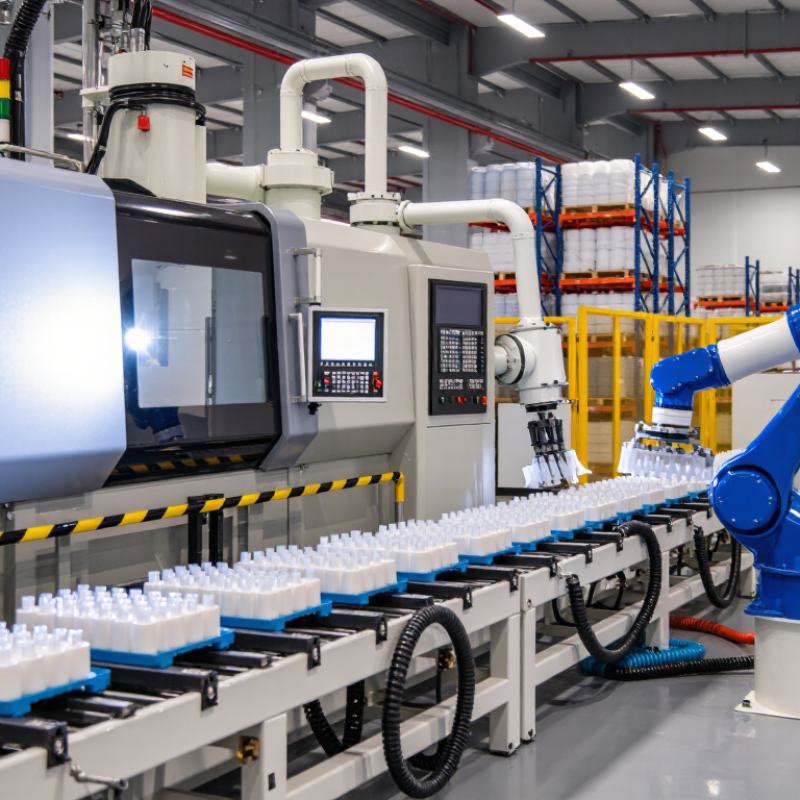
Injection machine robots are automated systems that remove molded parts, separate runners, and place products into boxes or downstream equipment. They commonly use servo-driven arms, grippers, sensors, and a programmable controller. The robot receives a signal when the mold opens. It then enters the mold area, grips the part, withdraws safely, and sends a completion signal.

A typical cycle begins with mold opening and ends with part release. Motion settings control speed, position, and timing. A vacuum gripper may lift thin packaging parts, while mechanical fingers can handle stronger components. Sensors check whether the part is held correctly. Interlocks prevent the robot from moving when the mold or safety door is not ready. Small timing errors can still cause scratches, deformation, or cycle delays.

On a real production floor, operators adjust the robot after checking part weight, temperature, and mold behavior. Clean grippers matter. So does stable air pressure. A robot may appear accurate, yet poor programming can create repeated faults. This is where practical experience becomes important. The fastest setting is not always the safest or most reliable. Some factories also connect robots with conveyors, inspection stations, and packing units. However, integration deserves careful testing. One overlooked signal can stop the entire cell. Even experienced teams must review assumptions, because material changes and seasonal temperature shifts may affect performance.

China’s Role in Injection Machine Robot Manufacturing

China’s Role in Injection Machine Robot Manufacturing

China has become a major production base for robots used beside injection molding machines. According to the International Federation of Robotics’ World Robotics 2024 report, Chinese factories installed 276,288 industrial robots in 2023. That represented about 51% of global installations. This scale supports faster development of Cartesian, SCARA, and six-axis systems for plastic processing.

Manufacturers benefit from a dense supply chain. Motors, controllers, aluminum frames, sensors, and mold components are often available within short delivery distances. This can reduce lead times and simplify customization. In production plants, robots remove molded parts, separate runners, stack components, and support visual inspection. Recent market studies also identify packaging, automotive plastics, and electronics as strong automation users. Yet capability is uneven. Some systems offer impressive speed but weaker software integration, maintenance training, or long-term documentation. That gap deserves attention.

Tips: Test the complete work cell, not only the robot. Check cycle-time stability, payload accuracy, emergency functions, spare-part access, and programming support. Request production samples using your actual mold and resin. Ask for measured data over several shifts. A low purchase price can become expensive when operators repeatedly correct positioning errors. Buyers should also verify compliance with applicable machinery and electrical safety standards in the destination market.

Key Types of Injection Machine Robots Made in China

China’s injection machine robot manufacturers produce several practical robot types for molding plants. The most common is the three-axis Cartesian robot. It removes molded parts, sprues, and runners with steady linear movement. Speed matters. These systems suit packaging, household goods, and automotive components.

Five-axis robots add wrist rotation and better part orientation. They can place products on conveyors or into cooling fixtures. Side-entry robots work well when fast cycle times and compact layouts matter. Six-axis articulated robots provide wider movement and handle complex post-molding tasks, such as trimming, stacking, and assembly. Collaborative robots are also available for lower-speed operations near workers, although their real value depends on risk assessment and proper guarding.

A reliable selection process checks payload, reach, repeatability, dry-cycle time, and mold clearance. End-of-arm tooling deserves equal attention. A poorly balanced gripper may mark the part or increase vibration. In production trials, engineers should test different part weights, temperatures, and release conditions. A robot that performs well with an empty gripper may struggle during continuous operation. That is an easy mistake to miss.

Control integration is another practical concern. Communication with the injection machine, conveyor, safety doors, and inspection equipment must remain stable. Technical documents should state spare-part availability, training, maintenance intervals, and emergency procedures. Lower purchase cost can help, but weak service support may create longer downtime. Even a well-specified robot can disappoint when the mold design changes.

China Top Injection Machine Robot Manufacturers? - Key Types of Injection Machine Robots Made in China

Robot Type Typical Configuration Common Payload Range Primary Motion and Entry Direction Typical Injection Molding Applications Main Advantages Important Selection Factors
Three-Axis Cartesian Robot Servo-driven X, Y and Z axes; optional pneumatic or servo-controlled wrist Approximately 2–20 kg, depending on reach and tooling Linear movement; usually enters the mold from the top and removes parts vertically Automotive components, household products, electronic housings, packaging parts and general molded components Simple structure, repeatable positioning, easy programming and good compatibility with many standard injection machines Machine size, mold opening height, demolding stroke, payload, cycle time and available installation space
Five-Axis Servo Take-Out Robot Three linear axes with two servo-controlled rotary axes Approximately 3–15 kg, depending on arm length and end-of-arm tooling High-speed linear travel with wrist rotation and tilting for part orientation Parts requiring post-mold rotation, accurate placement, insert handling or multi-position unloading Flexible orientation, precise placement and better access to complex mold layouts than a basic three-axis unit Required wrist range, acceleration, cable routing, mold interference clearance and synchronization with the molding cycle
Side-Entry High-Speed Robot Horizontal or lateral servo axes; commonly paired with high-speed take-out tooling Approximately 1–8 kg for fast-cycle applications Enters the mold from the side and removes parts with rapid horizontal movement Thin-wall packaging, food containers, caps, medical disposables and other high-volume products Short removal path, reduced interference with the operator area and suitability for fast molding cycles Side-access mold design, product cooling requirements, robot acceleration, safety guarding and conveyor layout
Sprue Picker Compact pneumatic or servo-controlled arm with a simple gripping or cutting tool Approximately 0.5–3 kg Short vertical or diagonal movement for removing runners and sprues from the mold area Two-plate molds, simple commodity parts, low-cost automation cells and runner separation Low initial cost, compact footprint, straightforward operation and relatively easy installation Runner weight, mold clearance, required cycle speed, pneumatic supply and whether the runner must be separated from the part
Servo Traverse Take-Out Robot Servo-controlled traverse, vertical and crosswise axes with programmable speed profiles Approximately 3–25 kg Top-entry linear movement with programmable acceleration, deceleration and placement positions Medium- and large-size molded parts, automotive trim, electrical enclosures and technical components High repeatability, adjustable motion profiles, stable operation and suitability for integrated downstream automation Injection machine platen size, mold height, product weight, required removal time and communication interface
Six-Axis Articulated Robot Six rotary joints with a multi-axis industrial robotic arm Approximately 3–50 kg, depending on the arm model and reach Multi-directional articulated motion; can approach the mold from the side, rear or front Complex part handling, insert loading, trimming, assembly, inspection, palletizing and integrated production cells Large workspace, flexible orientation and the ability to perform several operations with one robotic system Reach, payload, tool inertia, safety layout, cycle time, programming capability and integration with peripheral equipment
Insert-Loading Robot Cartesian or articulated robot equipped with a fixture for metal, fabric or preformed component inserts Approximately 1–20 kg, depending on insert size and tooling Places inserts accurately into the open mold before injection begins Metal insert molding, electrical terminals, threaded components, filters, clips and overmolded assemblies Improves placement consistency, reduces manual handling and supports repeatable insert molding quality Insert tolerance, fixture design, mold access, insert detection, presence verification and mold-closing safety interlocks
In-Mold Labeling Robot High-speed Cartesian or servo robot with vacuum plates or dedicated label grippers Approximately 1–10 kg, excluding certain large label fixtures Places labels or films onto the mold surface before plastic injection Decorated packaging, thin-wall containers, cosmetic packaging and consumer-product surfaces Combines labeling and molding in one cycle, reduces secondary decoration and improves label positioning Label material, static control, vacuum performance, mold surface geometry, label storage and cycle synchronization
Part Removal and Conveyor Robot Take-out robot combined with a conveyor, chute, separator or collection system Approximately 2–25 kg Removes molded parts, separates runners and transfers products to a downstream station Continuous production of molded components requiring cooling, counting, inspection or packaging Reduces manual collection, supports orderly material flow and can be connected to inspection or packaging equipment Part temperature, drop height, conveyor capacity, product orientation, counting accuracy and downstream takt time
Cleanroom-Compatible Injection Robot Servo robot with suitable lubricants, enclosed cable routing and cleanable surfaces Approximately 1–15 kg Controlled linear or articulated motion designed to limit particle generation Medical devices, laboratory consumables, pharmaceutical packaging and other controlled-environment products Supports hygienic production, repeatable handling and reduced contamination risk when used with suitable facility controls Cleanroom classification, materials, lubrication, washdown requirements, particle control and validation documentation

Technical note: Payload and configuration ranges are indicative engineering ranges rather than fixed specifications. Actual performance depends on the injection machine size, mold design, cycle time, product weight, end-of-arm tooling and required safety standards.

How to Evaluate China’s Leading Robot Manufacturers

China Top Injection Machine Robot Manufacturers?

Evaluating China’s leading injection machine robot manufacturers requires more than comparing catalog prices. Request production records, factory audit evidence, and references from similar molding projects. A polished showroom proves little. Examine assembly areas, wiring quality, calibration records, and final inspection procedures. Reliable suppliers explain weaknesses instead of promising perfect performance.

Technical comparison should match the robot to the actual injection process. Check payload, reach, cycle time, repeatability, mold compatibility, and end-of-arm tooling. Ask for cycle data using similar parts, materials, and mold layouts. Numbers need context. Review safety circuits, controller access, communication protocols, and integration with peripheral equipment. Request a sample run and inspect part removal, stacking accuracy, and surface protection.

Service quality often separates a dependable manufacturer from a risky purchase. Confirm spare-part availability, remote support hours, training arrangements, warranty limits, and installation responsibilities. Ask who handles software changes after commissioning. I once treated a fast quotation as proof of efficiency; missing installation costs later changed my checklist. That mistake still matters. A careful evaluation should compare total operating cost, documented acceptance tests, delivery control, and the supplier’s response to difficult questions. Be cautious when technical answers remain vague.

How to Evaluate China’s Leading Injection Machine Robot Manufacturers

A practical, non-brand evaluation model for injection-molding robot suppliers. The weighting reflects the factors typically used in industrial automation procurement: technical capability, integration reliability, compliance, service support, and total cost of ownership.

Higher percentages indicate greater importance during supplier evaluation. Buyers should verify performance through documented specifications, sample testing, CE or applicable compliance documentation, references, spare-parts availability, and service response commitments.

Applications and Future Trends of Injection Machine Robots

China Top Injection Machine Robot Manufacturers?

Applications and Future Trends of Injection Machine Robots

Injection machine robots now handle part removal, trimming, sorting, and precise placement. In a busy factory, a robot can remove hot molded parts within seconds. It can also stack components in consistent patterns, reducing scratches and operator fatigue.

Servo-driven arms support accurate movements around molds, conveyors, and inspection stations. These systems are useful for automotive parts, medical packaging, household products, and electronic housings. Safety guarding and reliable interlocks remain essential.

The next trend is connected automation. Robots will exchange data with molding machines, vision systems, and production software. This connection can reveal cycle delays, abnormal vibration, or rising rejection rates.

Artificial intelligence may improve defect recognition, but it still needs clean data and human review. Not every factory needs advanced robotics. A poorly planned system can create expensive downtime. The change is real. Yet practical testing matters more than impressive demonstrations.

Tips:

Check payload, reach, cycle time, and mold layout before choosing equipment. Ask manufacturers for application tests using your actual parts and materials. Review service response, spare-parts access, and operator training.

Leave enough space for maintenance. Small details matter. A flexible robot may cost more initially, but it can support future product changes.

Still, projected savings should be measured against real production records, not optimistic estimates.

FAQS

Why is China important in injection machine robot manufacturing?

China installed about 276,288 industrial robots in 2023. This large production base supports faster development and customization. Supply chains for motors, sensors, frames, and controllers are nearby. Scale helps. It does not guarantee quality.

Which robot types are commonly used beside injection machines?

Three-axis Cartesian robots are common for removing parts, sprues, and runners. Five-axis robots improve part orientation and placement. Six-axis robots support trimming, stacking, and assembly. Side-entry models suit compact, fast-cycle layouts.

What tasks can these robots perform?

Robots can remove molded parts and separate runners. They can stack components, load conveyors, and support visual inspection. Some systems assist with cooling fixtures or simple assembly. The exact result depends on tooling and programming.

How should buyers test an injection machine robot?

Test the complete work cell, not only the robot. Use the actual mold, resin, and production parts. Measure cycle stability across several shifts. A short demonstration can hide problems.

Which technical specifications deserve attention?

Check payload, reach, repeatability, dry-cycle time, and mold clearance. Confirm emergency functions and communication with connected equipment. Test different part weights and temperatures. Empty-gripper performance proves very little.

Why is end-of-arm tooling important?

A poorly balanced gripper can mark parts or create vibration. It may also reduce positioning accuracy during continuous operation. Test gripping pressure, release behavior, and part stability. Small tooling errors become expensive.

Can lower purchase cost reduce total production expenses?

Sometimes, but weak support can increase downtime. Operators may repeatedly correct positioning errors. Limited spare parts or training can extend interruptions. The cheaper option is not always cheaper.

Are collaborative robots suitable near workers?

They can support lower-speed operations near workers. Their suitability depends on risk assessment, guarding, and safe integration. Check emergency stops and door interlocks carefully. Convenience should not replace safety.

What service information should manufacturers provide?

Request spare-part lists, maintenance intervals, training details, and emergency procedures. Ask for programming support and measured production data. Confirm long-term documentation before purchase. This step is easy to neglect.

Conclusion

An Injection Machine Robot is an automated system designed to support plastic injection molding by handling tasks such as part removal, trimming, sorting, stacking, and transfer between production stages. Using programmable motion, sensors, and coordinated control systems, these robots improve cycle consistency, reduce manual handling, and help create safer, more efficient, and repeatable manufacturing processes. China has become an important production center for injection machine automation, offering a broad range of solutions for different machine sizes, production requirements, and factory layouts.

This article explains the key types of injection machine robots made in China, including side-entry, vertical, servo-driven, and customized automation systems. It also outlines how to evaluate manufacturers by considering engineering expertise, motion accuracy, system compatibility, after-sales support, safety features, customization capabilities, and long-term operating costs. Finally, it examines applications in industries such as packaging, household products, automotive components, and consumer goods, while discussing future trends including smarter controls, integrated vision systems, energy efficiency, flexible production, and greater use of connected factory technologies.


Sophia

Sophia

Sophia is a dedicated marketing professional with an exceptional depth of knowledge about her company's products and services. With a keen understanding of market trends and customer needs, she crafts insightful blog posts that not only inform but also engage readers, enriching the company’s online......