How to Choose an Arm Robot for Your Factory in 2026?

Time:2026-09-10 Author:Charlotte
0%

Choosing an Arm Robot for your factory in 2026 is not simply a matter of selecting the fastest model. It is a practical decision about people, processes, space, and long-term reliability. A robot that looks impressive in a showroom may struggle beside a warm molding machine or under inconsistent lighting. Real factory conditions matter.

Rodney Brooks, roboticist and founder of Rethink Robotics, once said, “The robots are coming, but they are not coming for your job.” His point remains useful. The right Arm Robot should support workers, reduce repetitive strain, and improve production consistency. It should not create a maintenance problem that your team cannot solve.

This guide examines the factors that deserve careful attention in 2026. These include payload, reach, repeatability, cycle time, end-of-arm tooling, vision, safety functions, programming, and system integration. Energy use and total ownership cost also deserve serious review. A low purchase price can hide expensive grippers, software licenses, training, and downtime.

Start with the task.

Measure the actual part weight. Record the required reach. Watch the operator perform the process during a busy shift. Small delays can become major losses across thousands of cycles. Speak with integrators and maintenance technicians, not only sales representatives. Their experience often reveals awkward cable routing, difficult calibration, or weak after-sales support.

No selection method is perfect. Production volumes may change, and new automation skills may be difficult to hire. Even a carefully tested Arm Robot can disappoint if the process itself is unstable. This article offers a structured way to compare options, question assumptions, and choose equipment that fits your factory’s real future.
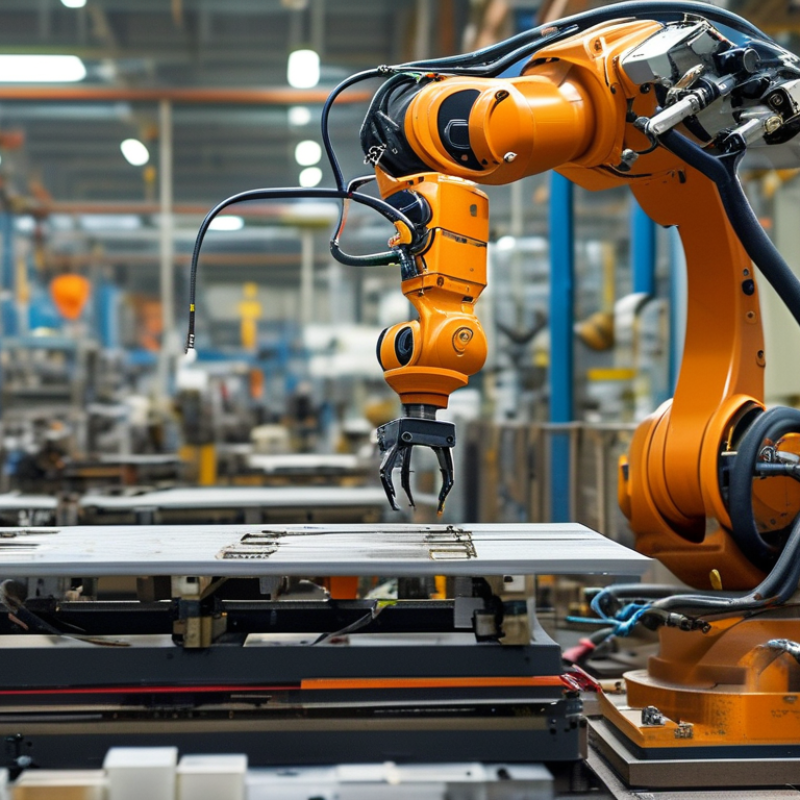
How to Choose an Arm Robot for Your Factory in 2026?

Define the Factory Task, Payload, Reach, and Required Precision

How to Choose an Arm Robot for Your Factory in 2026?

Define the factory task before comparing robot specifications. A machine for palletizing boxes needs different movement than one inserting small parts. Record the workpiece shape, surface, cycle time, and tool direction. Watch the operator perform the task. Small hand movements often reveal hidden requirements.

Payload includes more than the product. Add the gripper, camera, cables, and any force-control equipment. Leave a practical safety margin. A six-kilogram load may require a robot rated above ten kilograms. Reach also needs careful checking. Measure the distance from the mounting point to the farthest working position. Include fixture height and approach angle. A robot may reach the target but lose stiffness near its limit.

Required precision should match the process tolerance. Repeatability matters for placing components, while force control may matter more for pressing or assembly. Test the robot with real parts, not only digital models. Check performance after warm-up, during continuous cycles, and around nearby equipment. Dust, vibration, temperature, and limited floor space can change results.

Be cautious with impressive numbers. They may describe ideal laboratory conditions. In one assessment, a planned tool path looked perfect until a cable blocked the wrist. That mistake was avoidable, but the model ignored service access. Leave room for maintenance and future fixtures. A precise choice today can still become restrictive when production changes.

How to Choose an Arm Robot for Your Factory in 2026?

Define the factory task, payload, reach, and required precision before comparing robot specifications.

Factory task

Select the robot around the operation first: assembly and inspection usually need smaller, more precise arms, while palletizing needs higher payload and reach.

Payload

Include the gripper, tooling, cables, and the heaviest workpiece. A practical design margin of about 20% helps avoid operating continuously at the rated limit.

Reach

The arm must reach every required position without singularities or excessive joint extension. The values shown are typical planning envelopes for common factory tasks.

Required precision

Typical repeatability targets are approximately ±0.02–0.05 mm for precision assembly and inspection, ±0.05–0.10 mm for machine tending and welding, and ±0.10–0.20 mm for palletizing and packaging.

Representative engineering planning values for common industrial applications. Confirm the final payload, reach, cycle time, accuracy, and safety requirements through an application study.

Compare Robot Arm Types, Motion Ranges, and Control Methods

Choosing an arm robot in 2026 starts with movement, not marketing. IFR’s World Robotics 2024 report recorded 541,302 industrial robot installations worldwide in 2023. That scale reflects serious demand, but every factory still needs a site-specific decision.

Cartesian robots suit straight-line handling, palletizing, and large work envelopes. Their motion is predictable, though floor space can become a hidden cost. SCARA robots deliver fast horizontal assembly and precise pick-and-place cycles. They struggle with complex orientations. Delta robots excel at lightweight, high-speed sorting, but their payload and reach remain limited. Six-axis arms provide flexible wrist rotation for welding, machining, and irregular part handling. More joints mean more programming and maintenance effort. Collaborative arms can support shared work areas, yet their speed often drops when force and safety limits apply.

Control method matters as much as arm type. Traditional industrial controllers offer repeatable cycle timing and strong integration with sensors. Vision-guided control handles changing part positions, but lighting and calibration can cause disappointing results. Networked control improves data access, while poor cybersecurity or unstable connections create operational risk. ISO 9283 testing provides useful measures for pose accuracy, repeatability, and stabilization time. Use those figures, not only catalog reach. A 1,000-millimeter reach may look sufficient, but tooling, guarding, and wrist angle reduce practical access. I have seen layouts fail here. Recheck the reach envelope with a full-size cardboard mock-up. It is cheap. The better choice balances motion range, payload, controller behavior, operator skill, and future process changes.

Evaluate Safety Features, Workspace Integration, and Compliance Needs

How to Choose an Arm Robot for Your Factory in 2026?

Safety should be evaluated at the cell, not only in the robot’s specification sheet. The International Federation of Robotics reported 541,302 industrial robot installations in 2023. More machines also mean more human-robot interfaces. Check safety-rated monitored stops, speed and force limits, emergency stops, protective separation, and interlocked guarding. Test recovery after a fault. A machine that stops safely but restarts unexpectedly is not acceptable.

Workspace integration needs practical measurements. Record payload, reach, cycle time, wrist clearance, cable paths, and floor loading. Watch the arm during pallet changes, tool swaps, and maintenance access. ISO 10218 and ISO/TS 15066 provide important guidance for industrial and collaborative robot applications. However, standards do not replace a site-specific risk assessment. Dust, heat, washdown, sharp tooling, and uneven floors can change the hazard profile.

Compliance planning should include local workplace rules, electrical requirements, machine controls, and documented validation. The ANSI/RIA R15.06 framework may support risk planning in applicable facilities, while other regions may require different processes. Ask suppliers for safety-function calculations, test records, manuals, and change-control procedures. Do not accept vague compliance claims. I would also run a limited pilot before full deployment. Our first layout may look efficient on paper, yet maintenance access can become painfully narrow. That mistake is common. Record findings, revise the cell, and repeat the assessment before production approval.

Calculate Total Ownership Costs, Throughput, and Expected Return

How to Choose an Arm Robot for Your Factory in 2026?

Choosing an arm robot in 2026 should begin with economics, not the fastest cycle shown in a demonstration. Calculate total ownership costs across seven years. Include the purchase price, gripper, tooling, integration, guarding, training, software, energy, maintenance, downtime, and removal costs. A low-cost arm can become expensive when changeovers require specialists. Ask for service response times and documented reliability data. Verify safety requirements with qualified professionals before installation.

Include the purchase price, gripper, tooling, integration, guarding, training, software, energy, maintenance, downtime, and removal costs.

Throughput must reflect real production conditions. Record pick time, placement time, inspection delays, operator interaction, and planned breaks. Run a pilot using actual parts, not perfect samples. For example, 18-second cycles and 85% availability produce about 153 units per hour, before quality losses. Measure scrap separately. My first estimate ignored replenishment time. The projected return looked excellent, but the line missed its target. That mistake mattered. Estimate annual benefits from labor changes, added output, reduced scrap, and fewer stoppages. Then divide the investment by yearly net benefits to estimate payback.

For example, 18-second cycles and 85% availability produce about 153 units per hour, before quality losses.

Tips: Use a simple spreadsheet with optimistic, realistic, and difficult scenarios. Include one unexpected stoppage. Compare five-year and seven-year results. Ask operators to review the plan; their practical concerns often reveal hidden costs. A robot is not productive when materials wait beside it. Track quality, uptime, and actual output after deployment. Recalculate ROI after three months. Reality may disagree.

Plan Installation, Programming, Maintenance, and Future Expansion

How to Choose an Arm Robot for Your Factory in 2026

Plan the cell before comparing payloads or purchase prices. Measure reach, wrist clearance, cycle time, floor loading, power, air, and network access. Mark doors, aisles, guards, and maintenance positions on the drawing. International Federation of Robotics’ World Robotics 2024 reported 541,302 industrial robots installed worldwide in 2023. That scale increases workforce experience, but it also raises integration expectations. Request a site acceptance test with measurable cycle and quality criteria.

Programming should suit your technicians, not only an integrator. Use offline simulation to test reach, collisions, tooling, and recovery routines. Store versioned programs and document every change near the cell. Train operators on jogging, fault recovery, backups, and safe restart procedures. Keep a short, realistic fault library. Fancy dashboards cannot repair poor naming or missing records. Plan interfaces for vision, conveyors, fixtures, and production software before commissioning. An open, documented interface can reduce painful redesign later.

Maintenance planning begins with access. Leave space for grease points, cable inspection, tool changes, and controller replacement. Track alarms, cycle counts, temperatures, and failed components from day one. Deloitte’s 2024 Global Smart Manufacturing Survey found 86% of leaders expected smart manufacturing to support competitiveness within three years. Use that ambition carefully. I would not overbuy every option. Still, a cramped cell can make expansion expensive. Reserve electrical capacity, network ports, floor space, and validated process time. Review the design after a pilot run; operators often expose assumptions engineers missed.

FAQS

: How should I define the factory task before choosing an arm robot?

: Record the part shape, surface, cycle time, tool direction, and required movements. Watch the operator closely. Small hand movements matter.

How do I calculate the required payload?

Include the product, gripper, camera, cables, and force-control equipment. Add a practical safety margin. A six-kilogram load may need a higher-rated arm.

How should I check the robot’s reach?

Measure from the mounting point to the farthest working position. Include fixture height, approach angle, tooling, and wrist clearance. Catalog reach can mislead.

Which robot type suits different factory tasks?

Cartesian arms suit straight-line handling and palletizing. SCARA arms suit fast assembly. Delta arms suit lightweight sorting. Six-axis arms handle complex orientations.

What are the weaknesses of collaborative arms?

They can support shared workspaces and flexible tasks. However, safety limits may reduce speed. Test the real cycle time, not the advertised maximum.

Why does the control method matter?

Traditional controllers provide stable cycle timing. Vision control handles changing part positions. Lighting, calibration, network stability, and cybersecurity still need careful checking.

What safety features should the robot cell include?

Check monitored stops, speed limits, force limits, emergency stops, protective separation, and interlocked guarding. Test fault recovery. Safe stopping is not enough.

How can I validate the layout before installation?

Use real parts and a full-size cardboard mock-up. Test warm-up, continuous cycles, tool changes, and maintenance access. It is cheap. Dust, vibration, heat, and tight spaces may change the result.

What documents should I request before production approval?

Request safety calculations, test records, manuals, maintenance procedures, and change-control documents. Do not rely on vague compliance claims. Run a limited pilot when possible. Our first layout may still be wrong.

Conclusion

Choosing the right Arm Robot for your factory in 2026 starts with a clear understanding of the work it must perform. Define the required tasks, payload, reach, operating speed, and precision before comparing robot arm designs, motion ranges, and control methods. Consider whether the system must handle assembly, handling, welding, inspection, or other repetitive operations, and select a configuration that matches the workspace and production goals.

A complete evaluation should also cover safety functions, workspace integration, regulatory compliance, and communication with existing equipment. Calculate total ownership costs, including installation, programming, training, energy use, maintenance, and possible upgrades, then compare these costs with expected throughput and return on investment. Finally, plan for reliable commissioning, regular servicing, simple operator access, and future expansion so the Arm Robot can adapt to changing production demands while improving efficiency, consistency, and workplace safety.


Charlotte

Charlotte

Charlotte is a seasoned marketing professional with a deep understanding of the company's portfolio and a passion for elevating its presence in the market. With a keen eye for detail and a commitment to excellence, she ensures that our professional blog is regularly updated with insightful articles......