China has become a major sourcing base for injection-molding automation. Its manufacturers now serve automotive, medical, electronics, packaging, and consumer-goods factories worldwide. For global buyers, an Injection Robot is not merely a pick-and-place arm. It affects cycle time, worker safety, mold protection, scrap rates, and factory consistency.
The International Federation of Robotics reported 541,302 industrial robots installed worldwide in 2023. China accounted for about 276,288 installations, or more than half of the global total. This figure does not isolate injection-molding robots, but it shows the depth of China’s automation ecosystem. Grand View Research also estimates continued growth in the global industrial-robot market, supported by labor shortages, reshoring, and flexible production. Numbers help. They do not replace machine trials.
Milton Guerry, former president of the International Federation of Robotics, stated, “Robots are a key technology for the competitiveness of companies.” That principle is especially relevant to injection molding, where a three-second saving can become thousands of additional parts each month. Buyers should examine payload, take-out speed, servo accuracy, mold-height compatibility, EOAT design, controller language, and after-sales support. ISO 10218 compliance and documented risk assessments also matter.
A ranking can still mislead. The lowest quotation may hide weak integration or expensive downtime. Ask for sample videos, cycle-time records, reference customers, spare-parts policies, and factory acceptance tests. The best Chinese supplier is not always the largest. It is the one that can prove stable performance under your actual mold, material, and production conditions.
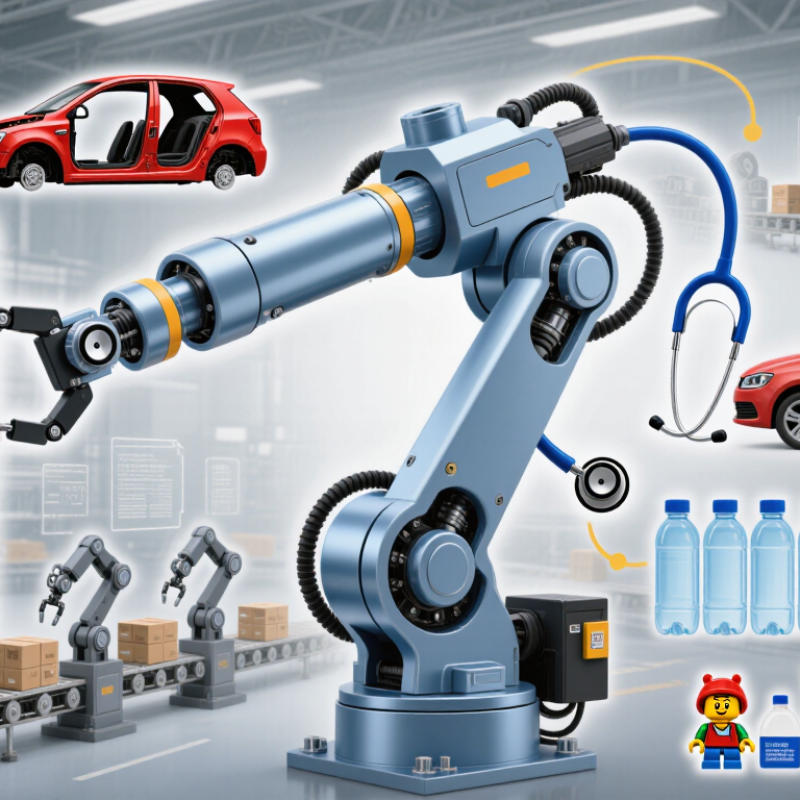
What Is an Injection Robot and Why China Leads Global Manufacturing
An injection robot is an automated system that removes molded parts from a machine. It can also trim runners, stack products, or place inserts. A typical unit uses a servo-driven arm, grippers, sensors, and programmable controls. In a production cell, timing matters. A delay of one second can disrupt the molding cycle.
China’s advantage comes from scale and practical engineering. The country has a dense network of mold, plastics, electronics, and motion-control suppliers. This shortens sourcing paths and supports faster customization. According to IFR’s World Robotics 2024 report, China installed 276,288 industrial robots in 2023, representing 51% of global installations. That manufacturing base helps injection robot producers improve components through repeated industrial use.
Demand is also expanding. Fortune Business Insights valued the global injection molding machine market at about 15.67 billion US dollars in 2023, with continued growth forecast through 2030. Injection robots benefit from this expansion, especially in automotive, packaging, medical, and consumer-product factories. Buyers should still examine cycle tests, payload accuracy, controller compatibility, and after-sales response. Cheap automation can become expensive when spare parts arrive late. A factory visit or recorded production trial reveals more than a polished catalog. Not every supplier performs equally. That is worth remembering.
| Robot Category | Typical Axes | Typical Payload | Typical Take-Out Time | Best-Fit Applications | Main Advantages |
|---|---|---|---|---|---|
| 3-Axis Cartesian Robot | 3 linear axes | Up to approximately 20 kg | Approximately 0.5–2.0 seconds | Part removal, sprue picking, stacking and simple insert handling | Simple programming, rigid structure and cost-effective automation |
| 5-Axis Servo Robot | 3 linear axes plus 2 rotary axes | Approximately 3–15 kg | Approximately 0.7–2.5 seconds | Complex part orientation, insert molding and multi-position placement | More flexible wrist movement and improved part placement |
| 6-Axis Articulated Robot | 6 rotary axes | Approximately 3–20 kg | Cycle-dependent; commonly above 1 second | Secondary assembly, inspection, machine tending and complex handling | Wide working envelope and high motion flexibility |
| High-Speed Pick-and-Place Robot | Typically 4 axes | Approximately 1–6 kg | Approximately 0.3–1.0 second | Small molded parts, caps, closures and high-volume packaging | Fast repetitive motion and strong suitability for short cycle times |
| Collaborative Robot for Injection Molding | Usually 6 axes | Commonly 3–16 kg | Usually slower than dedicated high-speed take-out robots | Low-volume production, loading, unloading and flexible cell operations | Flexible deployment, reduced guarding requirements in suitable applications and easy redeployment |
| Evaluation Dimension | What to Check | Why It Matters to Global Buyers |
|---|---|---|
| Payload and Gripper Weight | Robot payload must include the gripper, tooling, part and sprue where applicable. | Correct sizing prevents overload, vibration and premature mechanical wear. |
| Take-Out Time and Cycle Compatibility | Compare robot take-out time with mold cycle time, cooling time and machine safety signals. | The robot should not become the bottleneck in the molding cell. |
| Repeatability | Review the supplier's repeatability data under defined load and speed conditions; ISO 9283 is a recognized reference for robot performance testing. | Consistent positioning improves insert placement, trimming and downstream assembly. |
| Machine Interface | Confirm electrical signals, safety circuits, mold-protection logic and communication protocol. | Reliable integration reduces commissioning time and production interruptions. |
| Safety and Compliance | Check applicable requirements such as ISO 10218 for industrial robots and ISO/TS 15066 for collaborative robot applications. | Compliance supports safer installation and smoother acceptance in international markets. |
| Energy and Utilities | Evaluate electrical power, compressed-air demand, vacuum generation and standby consumption. | Lower utility demand can reduce operating costs over the equipment life cycle. |
| Service and Spare Parts | Assess remote support, documentation, training, replacement-part availability and response time. | International support capability directly affects uptime and maintenance risk. |
An injection robot removes molded parts from a molding machine. It can trim runners, stack products, or place inserts. Typical systems use servo arms, grippers, sensors, and programmable controls. Timing matters greatly.
A one-second delay can disturb the molding cycle. This may reduce output or create production bottlenecks. The robot must match the machine’s cycle time, take-out distance, and mold movement.
China has many suppliers for molds, plastics, electronics, and motion-control components. Shorter sourcing paths support faster customization. Large industrial demand also creates repeated testing opportunities. Scale helps, but it proves nothing alone.
Request projects with similar molds, payloads, cycle times, and factory layouts. Review repeatability data, dry-cycle videos, and energy readings. Ask for a witnessed acceptance test using actual materials. Catalog images are not enough.
Confirm payload accuracy, gripper design, axis speed, and controller compatibility. Check safety circuits and communication interfaces. Examine extended-arm payload reductions. Small details matter. They can affect cycle time and maintenance costs.
Inspect frame welding, cable routing, servo alignment, and controller testing. Review quality records and software revision control. Check cables near the mold area. Poor protection may create faults after thousands of cycles.
Prepare power, air pressure, mounting space, and communication interfaces. Technicians should guide leveling, calibration, and mold-clearance checks. Train operators before production begins. Keep spare sensors, cables, and gripper fingers available.
Confirm spare-parts availability and technician response times. Ask about remote diagnosis, software backups, and service coverage. Manuals should include photos, fault codes, and maintenance intervals. Promises are not enough.
A low quotation may exclude integration, spare parts, or training. Delayed components can interrupt production. Request a complete delivery scope and schedule in writing. Our checklist can still miss night-shift failures. Witnessed testing remains important.
China has become a major production base for Injection Robot systems because of its strong manufacturing infrastructure, competitive costs, engineering capabilities, and flexible supply chains. Chinese manufacturers produce a wide range of solutions, including take-out robots, servo-driven robots, multi-axis robots, and customized automation systems for different injection molding applications. These machines can improve production speed, positioning accuracy, workplace safety, and consistency while helping manufacturers reduce labor dependency and operating costs.
For international buyers, evaluating a supplier should involve product specifications, load capacity, motion accuracy, compatibility, certifications, customization ability, and production experience. Buyers should also assess communication, factory quality control, pre-shipment testing, packaging, installation support, operator training, spare-parts availability, and after-sales service. A reliable purchasing process includes clear technical documentation, sample testing when necessary, defined delivery terms, and an inspection plan. By comparing suppliers carefully and confirming long-term support, global customers can select an Injection Robot solution that matches their production goals and offers dependable value.

 ZHIYI Robotics