Best Industrial Robot Manufacturer in China?

Time:2026-09-10 Author:Sienna
0%

Choosing the best Industrial Robot manufacturer in China requires more than comparing catalog prices. Factory tours, application trials, and service records reveal what brochures often hide. A robot may look impressive on a showroom floor. It must also weld, palletize, or assemble reliably beside real workers. Real conditions matter. This guide examines manufacturers through practical evidence, engineering capability, and customer support. The answer is rarely simple.

We will consider payload accuracy, repeatability, cycle time, controller stability, and integration with vision systems. We will also inspect production quality, safety documentation, training, spare-parts availability, and response times. A serious supplier should explain test conditions clearly. Vague precision claims deserve careful questions. Independent certifications help, but they do not replace factory experience. Ask for references from similar industries. Then verify those results. Test the claims.

Cost matters, yet the cheapest quotation can become expensive after installation. Unplanned downtime, difficult software, and delayed components can affect the whole production line. This article compares Chinese manufacturers with a balanced perspective, not a promotional one. Some suppliers may excel in hardware but lack overseas support. Others may provide excellent integration while offering fewer customization options. That weakness should be stated openly. No comparison is perfect. Readers should match a manufacturer’s strengths with their process, workforce, and expansion plans. A reliable decision comes from documented trials, transparent communication, and measurable results—not from a confident slogan.
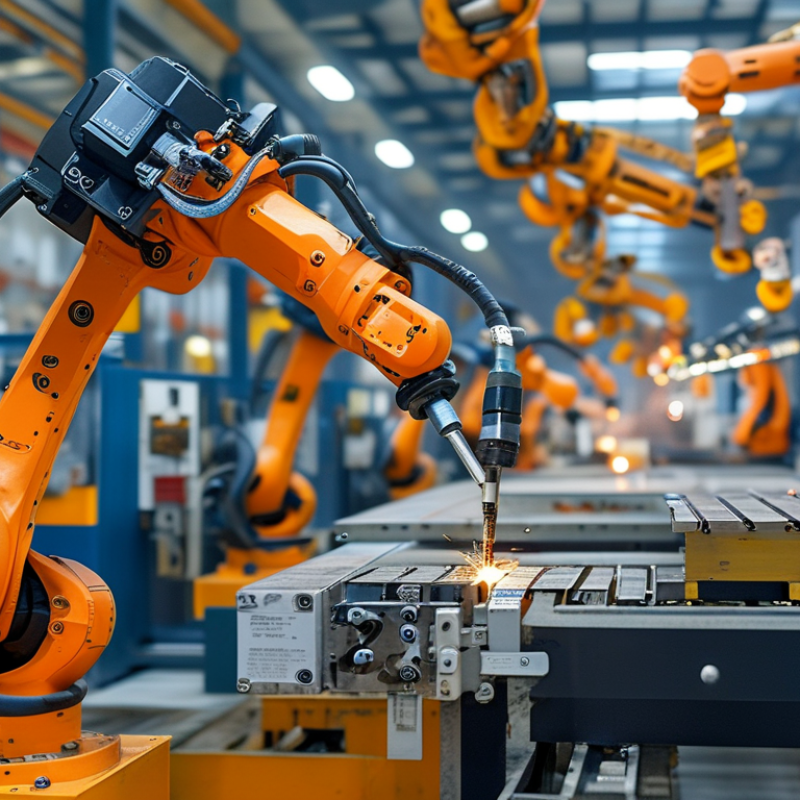
Best Industrial Robot Manufacturer in China?

China’s Industrial Robot Manufacturing Landscape

Best Industrial Robot Manufacturer in China?

China’s industrial robot manufacturing landscape has grown from basic assembly to integrated automation engineering. Manufacturers now produce articulated, SCARA, delta, and collaborative robots for welding, handling, inspection, and packaging. The strongest suppliers combine mechanical design, motion control, machine vision, and application testing. A robot arm alone is rarely enough.

Factory experience matters. In a production workshop, engineers should test payload, cycle time, reach, repeatability, and floor conditions before recommending a model. A 10-kilogram payload may fail when grippers, cables, and workpieces are counted together. Requesting sample runs can reveal vibration, heat buildup, or awkward programming. These details often matter more than brochure speed.

Quality evidence should include traceable components, documented inspections, software update policies, and responsive service. Look for training records, spare-parts planning, and clear warranty terms. Safety validation must match the complete cell, not only the robot. Local support can reduce downtime, but overseas buyers should verify language capability and response times. Price remains important. It should not replace engineering judgment. Some suppliers may overpromise integration results, while buyers may underestimate installation changes. That gap deserves careful review. A dependable manufacturer is not simply the cheapest or largest. It is the partner that explains limitations, measures performance honestly, and improves the system after real production feedback.

Key Criteria for Evaluating Chinese Robot Manufacturers

Best Industrial Robot Manufacturer in China?

Key Criteria for Evaluating Chinese Robot Manufacturers

Choosing an industrial robot manufacturer requires more than comparing prices. Examine engineering experience, production controls, and support after installation. Ask how many similar cells the manufacturer has delivered. Request cycle-time records from comparable applications. Numbers need context. A heavy payload may reduce speed, while a fast arm may lack useful reach.

Visit the factory, if possible. Observe machining, wiring, calibration, and final testing. Reliable manufacturers should explain repeatability measurements, payload limits, software versions, and maintenance intervals. Check quality procedures, including documented inspections and traceable components. Certifications can support credibility, but they should match the actual product and application. Review relevant safety documentation and risk-assessment practices before purchase.

Integration support often determines real performance. Confirm whether engineers can assist with grippers, vision systems, conveyors, and controller programming. Ask about training, spare parts, remote diagnostics, and response times. Speak with several existing users, not only selected references. Their comments may reveal delays that brochures hide. Paperwork is not enough.

A practical trial is valuable. Run the robot with your material, tooling, and production sequence. Measure accuracy after warm-up, repeated cycles, and minor interruptions. Some suppliers present ideal laboratory results. Factory conditions are less forgiving. I would also question my own assumptions, especially when a low quotation appears unusually attractive. A cheaper robot may create higher integration and downtime costs later.

Leading Industrial Robot Manufacturers in China

Best Industrial Robot Manufacturer in China?

China has become the world’s largest industrial robot market. According to the International Federation of Robotics’ World Robotics 2024 report, Chinese factories installed 276,288 industrial robots in 2023. That represented about 51% of global installations. The country also held more than 1.75 million operational robots. These figures explain why leading industrial robot manufacturers in China now compete on hardware, software, integration, and service response.

The best manufacturer is not always the one with the lowest quotation. A serious evaluation should examine payload accuracy, repeatability, cycle time, controller stability, and spare-part availability. Watch the robot work. A welding arm should maintain its path beside heat, dust, and vibration. A palletizing system should place cartons evenly after thousands of cycles. Independent testing matters. The IFR report also noted continued growth in Chinese robot production, showing stronger domestic engineering capability.

However, supplier claims still need scrutiny. Some performance figures come from controlled laboratory conditions, not crowded production floors. That gap can be expensive. Buyers should request factory references, failure-rate records, safety documentation, and local maintenance coverage. A practical pilot line often reveals more than a polished presentation. The strongest Chinese manufacturers usually provide flexible integration for automotive, electronics, logistics, and metalworking applications. Yet “best” remains application-specific. A fast six-axis robot may be unsuitable for delicate assembly. Reliability is learned over time.

Best Industrial Robot Manufacturer in China? - Leading Industrial Robot Manufacturers in China

Evaluation Dimension Relevant Industrial Standard or Market Reference What a Qualified Manufacturer Should Provide Buyer Verification Point
Robot Portfolio Common industrial configurations include articulated, SCARA, delta, and Cartesian robots. A product range covering the required payload, reach, speed, and application environment. Check whether the manufacturer offers a model specifically suited to the process rather than a general-purpose substitute.
Payload Capacity Industrial robot payloads range from less than 1 kg for light assembly to several hundred kilograms for heavy handling and welding. Published payload ratings that include the tool, gripper, workpiece, and applicable wrist-moment limits. Request payload diagrams and confirm performance at the required reach, speed, and wrist orientation.
Reach and Work Envelope Robot working envelopes vary from compact benchtop ranges to several metres for large material-handling systems. Detailed dimensional drawings, reach specifications, mounting options, and interference information. Validate accessibility to every process position, including approach angles and end-of-arm tooling clearance.
Repeatability Repeatability is commonly specified in millimetres and depends on robot size, payload, speed, and test conditions. Repeatability data measured under a defined test method, with operating conditions clearly stated. Compare the published value with the actual tolerance required by the application; repeatability is not the same as absolute accuracy.
Motion Performance Cycle time depends on payload, path, acceleration, orientation, tooling, and safety conditions. Application-based cycle-time simulations or demonstrations instead of relying only on maximum axis-speed figures. Test the complete operation, including loading, process time, settling, inspection, and handover.
Controller and Programming Modern robot controllers typically support teach pendants, offline programming options, diagnostics, and industrial communication networks. Clear programming tools, protected access levels, data backup, simulation support, and operator training. Confirm compatibility with the existing PLC, HMI, MES, vision system, and factory network.
Communication Interfaces Industrial installations may use Ethernet-based protocols, fieldbus systems, digital I/O, and safety communication. Documented interface options, communication manuals, software libraries, and integration support. Verify the exact protocol version and required hardware modules before placing an order.
Safety and Compliance Industrial robot systems are commonly assessed against machinery, robot, functional-safety, and electrical-safety requirements applicable to the installation region. Declarations, risk-assessment support, safety manuals, emergency-stop functions, and safety-rated monitoring options. Evaluate the complete cell, because compliance depends on integration and guarding as well as the robot itself.
Environmental Protection Ingress protection ratings such as IP54, IP65, or higher are used for different exposure levels; the rating varies by robot section. Separate protection ratings for the arm, wrist, controller, cables, and optional washdown or cleanroom configurations. Match the rating to dust, moisture, chemicals, temperature, food-contact, or cleanroom requirements.
Application Expertise Typical applications include welding, palletizing, packaging, machine tending, assembly, painting, inspection, and material handling. Documented application experience, sample programs, tooling recommendations, and process-specific engineering capability. Ask for comparable reference projects and measurable results such as cycle time, uptime, and defect rate.
System Integration A complete robotic cell may require fixtures, grippers, sensors, vision, conveyors, safety equipment, and production-line interfaces. In-house or qualified integration resources capable of delivering installation, commissioning, and production acceptance testing. Define responsibilities for mechanical design, electrical work, programming, validation, and operator training.
Reliability and Maintainability Overall equipment effectiveness is influenced by preventive maintenance, spare parts, troubleshooting, tooling, and operator practices. Maintenance schedules, fault diagnostics, spare-parts availability, service procedures, and documented recovery instructions. Review expected response times, local technical coverage, critical spare-part lead times, and warranty terms.
Total Cost of Ownership Purchase price is only one cost component; tooling, integration, training, software, maintenance, energy, and downtime also affect lifecycle cost. A transparent quotation separating robot hardware, controller, software, tooling, integration, commissioning, training, and ongoing support. Compare the estimated cost per produced unit and expected payback period rather than the initial equipment price alone.
After-Sales Support Successful deployment requires technical support, spare parts, software updates, training, and service continuity throughout the equipment lifecycle. Defined warranty coverage, service-level commitments, remote support, training plans, and escalation procedures. Use a written support agreement with response times, coverage hours, exclusions, and parts availability clearly stated.

Note: Actual robot specifications and compliance status vary by model, configuration, application, and destination market. Always confirm the latest technical documentation and installation requirements with the manufacturer.

Robot Types, Technologies, and Industry Applications

Choosing the best industrial robot manufacturer in China requires more than comparing prices. The real test is whether its robot types match your process, floor space, and production rhythm. Articulated robots handle welding, painting, and palletizing with flexible arm movement. SCARA robots suit fast pick-and-place work on compact assembly lines. Delta robots can sort lightweight food or pharmaceutical packages at high speed. For heavy loads, gantry and collaborative robots may offer better reach or safer shared workspaces with validated safeguards. Small details matter.

In our factory assessments, we examine repeatability, payload, cycle time, and controller response. A robot may claim impressive speed, yet poor fixture accuracy can ruin the result. Vision systems locate uneven parts, while force sensors control pressing, polishing, and insertion. Offline programming reduces trial time, but it cannot replace a skilled technician on the floor. We also check servo quality, cable protection, safety functions, spare parts, and training support. Documentation must be clear enough for a maintenance worker during a night shift. Specifications are not everything. Measure it.

Applications vary across automotive, metal fabrication, electronics, logistics, and medical equipment production. Welding cells need stable heat control and repeatable torch paths. Warehouses often need mobile robots, conveyors, and software that coordinates changing orders. Electronics lines demand clean handling, precise motion, and low vibration. A reliable manufacturer should test the complete cell, not only the robot arm. It should provide measurable acceptance data and realistic maintenance schedules. Still, no system is perfect. Dust, rushed integration, and unclear ownership can expose weaknesses after installation. Fit matters.

Best Industrial Robot Manufacturer in China? — Robot Types, Technologies, and Industry Applications

Robot density is a useful benchmark for comparing industrial automation maturity across manufacturing markets. It measures operational industrial robots per 10,000 manufacturing employees and does not represent a supplier or company ranking.

China recorded approximately 470 industrial robots per 10,000 manufacturing employees in 2023, ranking among the world’s leading automation markets. Common robot types include articulated, SCARA, delta, Cartesian, and collaborative robots, supporting applications such as welding, assembly, machine tending, packaging, palletizing, painting, and material handling.

Source: International Federation of Robotics, World Robotics 2024, 2023 robot-density data.

How to Select the Best Manufacturer for Your Needs

How to Select the Best Industrial Robot Manufacturer in China

A suitable manufacturer should fit your process, not merely offer the lowest quotation. The International Federation of Robotics reported 541,302 industrial robot installations worldwide in 2023. China accounted for about 51% of them, showing strong manufacturing capacity and intense competition. However, production volume does not prove engineering quality.

Start with your real operating conditions. Share the payload, reach, cycle time, product tolerance, working temperature, dust level, and required uptime. Ask for recorded cycle tests using parts similar to yours. A polished demonstration can mislead. Check whether the robot maintains accuracy after continuous operation, not only during a short showroom trial. Review the controller’s communication options, safety functions, programming support, and spare-parts availability. ISO 10218 and ISO/TS 15066 references can help assess robot and collaborative-application safety.

Request a factory audit, sample acceptance plan, and clear warranty terms. Examine welds, cable routing, gearbox suppliers, calibration records, and final inspection procedures. The IFR’s World Robotics 2024 report placed China’s operational industrial robot stock above 1.7 million units in 2023, but installed-base growth also increases the need for dependable service. Ask how quickly technicians respond and who pays for travel. Small details matter.

Do not ignore integration. A capable robot may still fail beside an unstable gripper or poorly designed fixture. My own screening mistake would be trusting specifications before checking after-sales evidence. Demand references from comparable applications, measurable FAT and SAT criteria, and training for your operators. Cheap first. Costly later.

FAQS

: Why is China important in the industrial robot market?

: Chinese factories installed 276,288 industrial robots in 2023. That represented about 51% of global installations. More than 1.75 million robots were operating nationwide. The scale is impressive, but growth does not guarantee quality.

How should buyers choose an industrial robot manufacturer?

Compare payload accuracy, repeatability, cycle time, controller stability, and spare-part availability. Do not choose only by the lowest quotation. Watch the robot perform on your actual production materials. Fit matters.

Which robot type suits welding and palletizing?

Articulated robots often suit welding, painting, and palletizing. They provide flexible arm movement across larger work areas. A welding arm should maintain its path near heat, dust, and vibration. A palletizing robot should place cartons evenly after thousands of cycles.

Are SCARA and delta robots suitable for compact production lines?

SCARA robots support fast pick-and-place tasks on compact assembly lines. Delta robots can sort lightweight packages at high speed. Their value depends on product weight, layout, and required precision. Small details matter.

Can collaborative or gantry robots handle heavy loads?

Gantry robots can provide long reach and structured movement for heavy loads. Collaborative robots may support shared workspaces when safeguards are properly validated. The correct choice depends on payload, reach, speed, and workspace risks. Safety claims need practical testing.

What technologies improve robot performance?

Vision systems help locate uneven parts. Force sensors support pressing, polishing, and insertion tasks. Offline programming can reduce trial time before installation. It cannot replace a skilled technician on the factory floor.

What should buyers inspect during factory assessments?

Check servo quality, cable protection, safety functions, spare parts, and training support. Review failure-rate records, factory references, and maintenance coverage. Documentation should guide a worker during a night shift. Measure it.

How can buyers verify manufacturer claims?

Request independent testing and complete-cell acceptance data. Laboratory figures may not reflect crowded production floors. Run a practical pilot line with real fixtures and materials. Our evaluation may still miss long-term failures.

Which industries commonly use industrial robots?

Common applications include automotive, metal fabrication, electronics, logistics, and medical equipment production. Electronics lines need clean handling, precise motion, and low vibration. Warehouses need software coordinating mobile robots, conveyors, and changing orders. The complete system matters more than the robot arm alone.

Conclusion

China has developed a broad and competitive industrial robot manufacturing landscape, supported by strong engineering capabilities, extensive supply chains, and growing demand from automotive, electronics, logistics, metalworking, and other industries. This article explains how to evaluate an Industrial Robot manufacturer by examining product quality, motion accuracy, payload capacity, operating speed, system stability, software compatibility, customization capabilities, safety design, technical support, delivery reliability, and total ownership cost. A capable manufacturer should offer practical solutions rather than focusing only on specifications.

The discussion also compares major categories of robots, including articulated, SCARA, delta, collaborative, and mobile systems, while highlighting their typical applications and technological features. Finally, it presents a structured approach to selecting the best supplier for specific production goals. Buyers should consider their workflow, workspace, materials, cycle times, integration requirements, workforce skills, maintenance expectations, and future expansion plans before making a decision. A careful evaluation can help companies achieve higher productivity, consistent quality, improved workplace safety, and long-term operational value.


Sienna

Sienna

Sienna is a skilled marketing professional with a deep expertise in our company’s core products and services. With a passion for innovation and detail, she plays a pivotal role in crafting insightful blog posts that not only highlight the unique features of our offerings but also provide valuable......